Choosing the wrong laser marking machine can slow your production and increase costs. Before you invest, understand what truly fits your industry. One wrong decision today can impact your output for years.
Introduction: Why the “Right” Choice Matters
Choosing the right laser marking machine for your industry is not just a purchase decision, it is a long-term investment. A laser marking machine can easily run for 8 to 10 years. If you choose the wrong one, production delays, poor marking quality, and rework costs will increase over time.
Laser marking is a permanent, high-contrast, non-contact process used to create marks like serial numbers, barcodes, logos, and traceability codes. Unlike traditional methods, it does not damage the material surface and ensures long-lasting results.
In this guide, you will understand how to choose the right laser marking machine by comparing Fiber, CO2, and UV laser technologies. This will help you make a practical and profitable decision.
At the same time, if you are already using a laser cutting machine, CNC laser cutting machine, or laser welding machine, integrating marking into your workflow can improve efficiency. You can explore how combining laser cutting, welding and marking machine reduces operational costs to understand the full benefit.
Factor 1: Material Compatibility (The Deal-Breaker)
The first and most important factor is your material. The type of material directly decides which laser source you should choose.
Metals vs Non-Metals
- Fiber Laser Marking Machine: Best for metals like stainless steel, aluminum, brass, copper, and coated metals. It can also mark some engineering plastics.
- CO2 Laser Marking Machine: Ideal for non-metals such as wood, leather, glass, rubber, paper, and textiles.
- UV Laser Marking Machine: Used for sensitive materials. It is perfect for medical-grade plastics, PCBs, and delicate surfaces where heat should be minimal.
Surface Condition Matters
If your material has coating, anodizing, or plating, the marking result will change. Fiber laser works well on coated metals, while UV is better for delicate surfaces.
If your business also deals with fabrication using a cutting machine for metal or fiber laser cutting machine, choosing compatible marking technology becomes even more important.
Factor 2: Understanding the Type of Mark Required
Different industries need different marking styles. You should clearly define your requirement before choosing a machine.
Laser Etching vs Engraving
- Etching creates a shallow mark with contrast.
- Engraving removes material and creates depth.
Laser Annealing
Used in medical and aerospace industries. It creates marks without damaging the protective surface layer. This is critical for corrosion resistance.
Color Marking
If you need multiple colors on stainless steel or titanium, MOPA fiber lasers are the right choice. They control pulse width and create color variations.
Understanding your marking type also helps when you scale operations with CNC cutting machine setups and automation.
Factor 3: Production Volume & Marking Speed
Production requirements define the machine configuration.
Throughput Needs
If you need to mark thousands of parts per day, high-speed galvo-based laser marking machines are recommended. Entry-level systems are suitable for low-volume work.
Automation Integration
- Standalone desktop system for small workshops
- Conveyor-based integration for large industries
Many manufacturers now connect marking systems with laser cutter and CNC laser cutting machine lines to create a continuous workflow.
Duty Cycle
Industrial environments require machines that can run 24/7. Always check if the system is designed for continuous use.
Factor 4: Precision and Marking Area
Precision is critical, especially in electronics and medical sectors.
Field of View
Lens size defines marking area:
- Small area: 110 mm x 110 mm
- Large area: up to 300 mm x 300 mm
Resolution
- Micro marking for electronics and PCB
- Large logo marking for automotive or construction
If your operations already include metal laser cutting or CNC cutting machine setups, maintaining similar precision in marking ensures consistency.
Factor 5: Total Cost of Ownership (TCO)
The machine price is only one part of the investment. You should evaluate long-term costs.
- Consumables: Laser marking machines do not use ink or chemicals. However, filters and optics require periodic maintenance.
- Maintenance: Fiber laser marking machines require less maintenance compared to CO2 systems.
- Energy Efficiency: Modern fiber systems consume less power. This reduces operational cost over time.
If you want to understand cost savings in a broader setup, you can also refer to how combining laser cutting machine, laser welding machine, and marking machine improves profitability.
Factor 6: Safety and Compliance
Safety is important for both operators and compliance standards.
Laser Classes
- Class 1: Fully enclosed and safe
- Class 4: Open system, requires safety measures
Industry Compliance
Ensure the system meets standards like ISO, CE, or FDA depending on your industry. For industries like automotive, construction, and electronics, compliance is often mandatory for vendor approval.
Industry-Specific Cheat Sheet
| Industry | Recommended Laser | Common Materials |
|---|---|---|
| Automotive | Fiber | Steel, Aluminum, Engine Parts |
| Medical | UV / Fiber (Anneal) | Surgical Tools, Implants |
| Packaging | CO2 | Cardboard, Paper, Glass |
| Electronics | UV / Green | PCB Boards, Microchips |
If you are working in heavy fabrication sectors, you can also explore how laser cutting machine and laser welding machine solutions support industries like shipbuilding and large-scale manufacturing.
SLTL Laser Marking Machines for Different Applications
To simplify your decision, here are some SLTL laser marking machine options based on real industrial use cases:
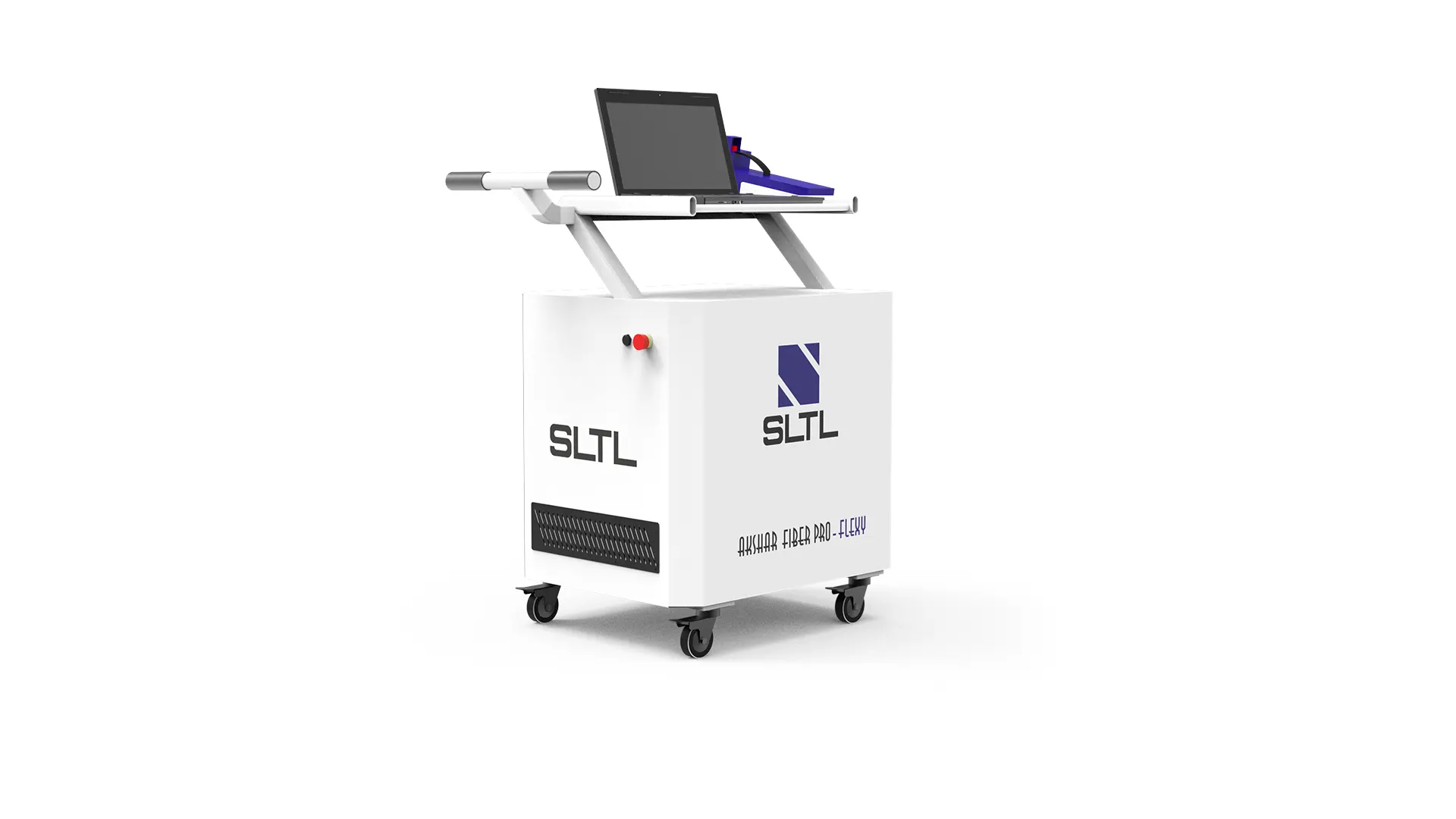
- REX (Diode Laser): Best suited for traceability marking where consistent and reliable marking is required.
- ELITE (Fiber Laser): Designed for hallmarking applications, especially in jewellery and precious metal industries.
- Flexy (Diode Laser): A movable solution, ideal for marking on large, heavy, or difficult-to-handle components.
- NEO (Fiber Laser – 20W to 60W): A multipurpose high-power laser marking machine suitable for industrial applications requiring speed and depth.
- Ultra (Fiber Laser – 20W to 120W): A flexible multipurpose system for both low and high power requirements across industries.
- OptiFly (CO2 Laser): Perfect for plastic marking and high-speed mass production environments.
- Carbon (CO2 Laser): A reliable CO2-based marking system used for general non-metal marking applications.
These machines can be easily integrated with your existing laser cutting machine, CNC laser cutting machine, or laser welding machine setup to create a complete manufacturing workflow.
Conclusion: Making the Final Decision
Before finalizing your purchase, always test your material on the machine. A sample marking test gives clarity on quality, speed, and compatibility. Also, choose a manufacturer who provides strong after-sales support, spare parts availability, and local service.
If you are planning to upgrade your full setup, including laser cutter, CNC laser cutting machine, and marking solutions, you can visit exhibitions like Indus-tech 2026 and Metal Forming Expo 2026 to see machines live in action. You can also visit the SLTL manufacturing facility for a live demonstration of laser cutting machine, laser welding machine, and laser marking machine solutions. To book a demo, you can contact at +919925036495 or email mkt@sltl.com or visit www.sltl.com and explore the right solution for your business growth.
For a deeper understanding of related technologies, you can also explore how to choose the right laser welding machine for your industry and see how integrated systems are transforming modern manufacturing.
Making the right decision today ensures consistent quality, lower costs, and long-term productivity in your operations.
FAQs: Choosing the Right Laser Marking Machine
1. I am confused between Fiber, CO2, and UV laser. How do I decide?
You should first check your material. If you are marking metals, fiber laser is the right choice. If you are working with wood, plastic, or glass, CO2 is better. If your material is sensitive or heat-sensitive, you should choose UV laser.
2. I am already using a laser cutting machine. Do I still need a separate marking machine?
Yes, you should use a dedicated laser marking machine for precise and permanent marking. While a laser cutter or CNC laser cutting machine can mark, it is not optimized for high-speed and high-quality marking tasks.
3. My markings are fading over time. What am I doing wrong?
You are likely using the wrong laser type or incorrect parameters. You should choose the correct laser source and optimize settings like power, speed, and frequency to ensure permanent marking.
4. I have to mark very small QR codes and serial numbers. Which machine should I choose?
You should choose a high-precision fiber or UV laser marking machine. These machines provide better beam quality and can handle micro-level marking required in electronics and medical industries.
5. I need to mark large and heavy parts. How can I manage that?
You should go for a portable or movable solution like Flexy. It allows you to mark directly on heavy components without moving them.
6. My production volume is high. Will a standard machine handle it?
You should choose a high-speed galvo-based laser marking machine with automation integration. This will help you maintain speed and consistency in mass production.
7. I want color marking on stainless steel. Is it possible?
Yes, you can achieve this using MOPA fiber laser technology. You can control pulse settings to create different colors on metals like stainless steel.
8. I am worried about maintenance cost. Are laser marking machines expensive to maintain?
You will find that fiber laser marking machines have low maintenance compared to traditional systems. There are no consumables like ink, but you should maintain optics and filters regularly.
9. I want to integrate marking with my existing production line. Is it possible?
Yes, you can integrate laser marking machines with conveyor systems and CNC cutting machine or laser welding machine setups to create a smooth production flow.
10. I want to test before buying. How can I be sure this machine will work for me?
You should always request a sample marking test. You can visit the SLTL facility for a live demo of laser marking machine, laser cutting machine, and laser welding machine solutions. To book a demo, you can contact at +919925036495 or email mkt@sltl.com or visit www.sltl.com.
11. I am running a small workshop. Is laser marking still a good investment for me?
Yes, you can start with an entry-level system and scale later. Laser marking helps you improve quality, reduce manual work, and build professional output even in small setups.
12. I am facing rejection due to poor marking quality. Can this be solved?
Yes, you can solve this by choosing the right laser marking machine and optimizing parameters. A proper setup ensures clear, permanent, and high-contrast marking that meets industry standards.
Author Bio

Mayank Patel
R&D HeadMayank Patel is the Head of Research & Development at SLTL Group, bringing over 20+ years of hands-on experience in the field of laser technology. A forward-thinking innovator, he has played a pivotal role in developing advanced laser cutting, welding, and marking solutions tailored for diverse industries. Under his leadership, SLTL’s R&D division continues to push the boundaries of what laser systems can achieve in modern manufacturing.