Still choosing the wrong chuck for your machining setup? Learn how 3-jaw and 4-jaw chuck systems impact precision, speed, and production quality before your next investment decision slows your business down.
In modern metal fabrication and precision machining, selecting the right chuck system directly impacts production quality, machining speed, and overall operational efficiency. Whether manufacturers are using a CNC turning center, a tube laser cutting machine, or an advanced CNC laser cutting machine, workholding precision remains one of the most critical factors in achieving consistent output.
Among the most widely used chuck systems in machining and tube processing are the 3-jaw chuck and the 4-jaw chuck. While both are designed to hold the workpiece securely during rotation, their design, gripping mechanism, and applications are very different.
Today, industries such as automotive parts, aerospace, medical devices, tool and mold manufacturing, electronics, jewelry, and construction increasingly require tighter tolerances, faster production, and more flexibility in handling different shapes and materials. Because of this, understanding the difference between these chuck systems has become essential for production engineers, machine operators, and fabrication business owners.
Manufacturers using advanced laser solutions such as tube laser cutting systems, fiber laser cutting machines, laser welding machines, and laser engraving machines must carefully evaluate chuck configurations before investing in a machine.
Understanding the Basic Difference Between 3-Jaw and 4-Jaw Chucks
The primary difference between these chuck systems lies in the way the jaws move and hold the workpiece.
3-Jaw Chuck
A 3-jaw chuck uses a self-centering scroll mechanism. All jaws move together simultaneously when the chuck key rotates. This allows the workpiece to automatically align near the spindle center.
This makes the 3-jaw chuck highly suitable for:
- Round tubes
- Hexagonal profiles
- Symmetrical components
- Repetitive production jobs
- High-speed machining environments
Because setup is extremely fast, it is commonly used in automated production lines and CNC systems.
Manufacturers working with repetitive tube profiles often combine this setup with intelligent nesting software solutions such as SLTL Bolt: The Advanced Tube Nesting Software Revolutionizing Tube Cutting, which helps improve material utilization and production planning.
4-Jaw Chuck
A 4-jaw chuck works differently. Each jaw moves independently using separate adjustment screws. This allows operators to manually align the workpiece with much greater control.
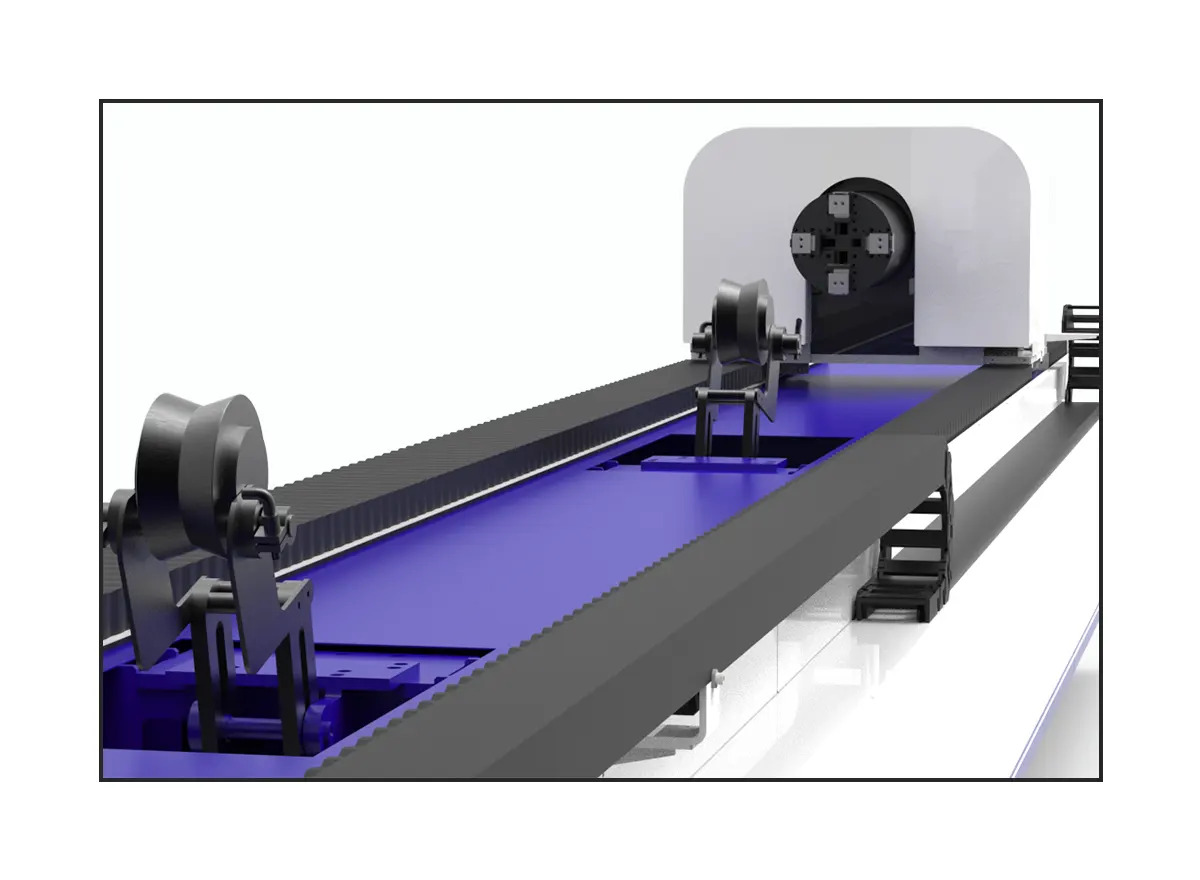
The 4-jaw chuck is preferred for:
- Square tubes
- Rectangular profiles
- Irregular shapes
- Offset machining
- Heavy-duty tube processing
- High-precision operations
This flexibility makes it extremely useful in industries where custom fabrication and tight tolerance machining are critical.
Manufacturers looking for highly stable tube processing systems often explore the Features of 4 Chuck Tube Cutting Machine: Advanced Technology for Precision Tube Processing to understand how advanced chuck systems improve productivity and precision.
Why Chuck Selection Matters in Modern Manufacturing
In advanced manufacturing environments, the chuck system affects far more than just work holding. It directly influences:
- Machining accuracy
- Runout control
- Production speed
- Vibration stability
- Surface finish quality
- Material wastage
- Automation efficiency
- Overall machine productivity
This becomes even more important when manufacturers use advanced systems such as:
- Laser cutting machine
- Fiber laser cutting machine
- High power laser cutting machine
- Lower power laser cutting machine
- Laser welding machine
- Handheld laser welding machine
- Laser engraving machine
Modern industries now demand complete manufacturing ecosystems where cutting, welding, marking, and automation work together seamlessly. This is where SLTL Group supports manufacturers through advanced laser solutions designed for different industrial applications.
Self-Centering Advantage of 3-Jaw Chucks
One of the biggest benefits of a 3-jaw chuck is speed.
Since all jaws move together automatically, operators can clamp standard workpieces within seconds. This dramatically reduces setup time and increases machine uptime.
Key Advantages of 3-Jaw Chucks
Faster Setup: The self-centering mechanism minimizes manual adjustment.
Higher Productivity: Less setup time means more spindle utilization and faster production cycles.
Better for Mass Production: Ideal for manufacturers handling large volumes of similar components.
Easier Operation: Operators require less manual alignment skill.
This makes 3-jaw chucks highly suitable for industries such as:
- Automotive parts manufacturing
- Electronics
- Construction components
- Standard industrial fabrication
Manufacturers processing structural components often combine tube processing with advanced solutions like Tube Laser Cutting for Agricultural Machinery and Light Structures, where faster tube handling improves overall productivity.
Accuracy Limitations of 3-Jaw Chucks
Although 3-jaw chucks are highly efficient, their accuracy depends on internal wear conditions. Over time:
- Scroll plates wear out
- Jaw guides lose precision
- Runout increases
- Concentricity decreases
For standard machining jobs, this may not create major issues. However, in industries requiring extremely tight tolerances, even small deviations can affect final product quality. Industries such as aerospace, medical devices, and tool and mold manufacturing often require more precise workholding systems.
Independent Adjustment Advantage of 4-Jaw Chucks
The biggest advantage of a 4-jaw chuck is precision control.
Because each jaw adjusts independently, machinists can manually align the workpiece using dial indicators and precision measurement tools.
Key Advantages of 4-Jaw Chucks
- Superior Concentricity: Runout can be minimized to extremely low levels.
- Stronger Workholding: Four gripping points provide better stability during heavy machining.
- Support for Irregular Shapes: Square, rectangular, and asymmetrical profiles can be processed securely.
- Offset Machining Capability: Useful for eccentric turning and specialized operations.
This makes 4-jaw systems ideal for:
- Aerospace components
- Medical devices
- Heavy fabrication
- Custom engineering applications
- Precision fittings
- Structural assemblies
Manufacturers evaluating advanced tube systems often ask themselves: How Many Chucks Does Your Tube Laser Cutting Machine Require? The answer depends on the application, material type, production speed, and precision requirements.
Concentricity and Runout in Precision Manufacturing
Runout directly affects machining quality.
In high-precision applications, improper workholding can cause:
- Surface finish defects
- Dimensional inaccuracies
- Poor assembly fitment
- Vibration problems
- Tool wear
- Scrap generation
3-Jaw Chuck Runout
Most standard 3-jaw systems provide repeatability within approximately: 0.001 to 0.003 inches and it is suitable for many production environments.
4-Jaw Chuck Runout
With careful manual alignment, 4-jaw systems can often achieve: 0.0002 to 0.0005 inches. This level of precision becomes critical in industries such as:
- Aerospace
- Medical manufacturing
- Tool and mold manufacturing
- Precision electronics
- High-accuracy assemblies
Production Speed vs Precision
Choosing between a 3-jaw and 4-jaw chuck often comes down to balancing productivity and accuracy.
3-Jaw Chuck for Faster Throughput
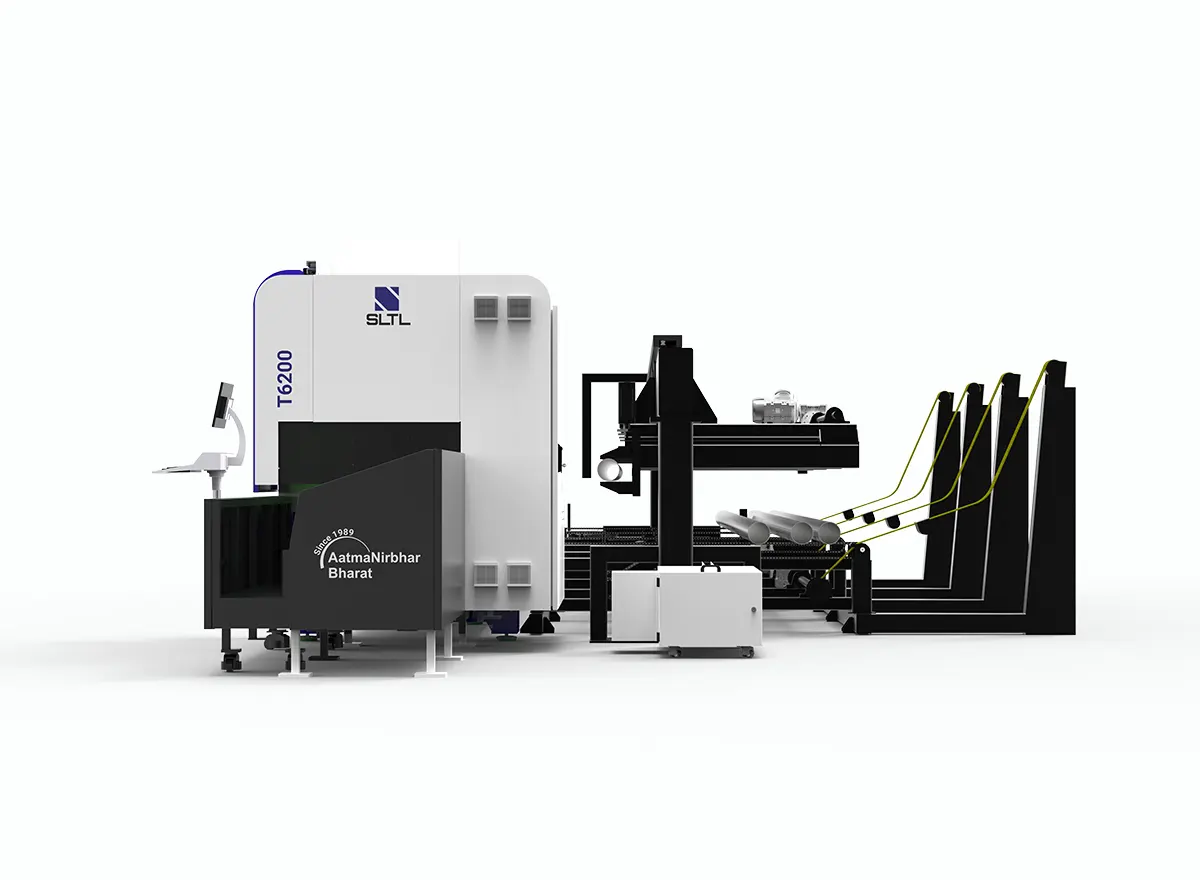
The 3-jaw system is ideal for:
- High-volume production
- Standardized parts
- Automated workflows
- Faster cycle times
It works exceptionally well in CNC environments where production speed is the primary goal.
4-Jaw Chuck for Better Control
The 4-jaw system is better suited for:
- Prototyping
- Custom fabrication
- Tight tolerance applications
- Irregular workpieces
- Secondary precision operations
Although setup takes longer, the improved alignment helps reduce scrap and rework.
Importance of Chuck Systems in Tube Laser Cutting Machines
In tube laser cutting applications, chuck configuration becomes even more important.
Poor workholding can lead to:
- Tube vibration
- Inaccurate cuts
- Poor edge quality
- Material slippage
- Higher rejection rates
Modern tube laser cutting machines now use advanced multi-chuck systems for better tube stability and near-zero tailing performance.
SLTL Group manufactures advanced laser cutting machines equipped with intelligent automation and high-precision chuck systems to improve processing accuracy across different tube profiles and material thicknesses.
How SLTL Supports Different Industries
SLTL Group provides complete laser solutions for manufacturers across various industries.
- Automotive Parts: Advanced laser cutting machine systems support chassis components, exhaust systems, brackets, and structural parts.
- Aerospace: High power laser cutting machine systems help achieve tight tolerances for critical aerospace components.
- Medical Devices: Laser engraving machine and precision cutting systems support highly accurate medical manufacturing requirements.
- Electronics: Lower power laser cutting machine systems enable delicate cutting and precision marking.
- Jewelry: Laser welding machine and laser engraving machine solutions help jewelry manufacturers achieve cleaner finishing and detailed marking.
- Construction: Heavy-duty fiber laser cutting machine systems support structural steel and architectural fabrication.
- Tool and Mold Manufacturing: Precision laser solutions help improve machining accuracy and reduce production time.
Advanced Manufacturing Beyond Cutting
Modern manufacturers no longer rely only on cutting systems. Integrated manufacturing ecosystems now include:
- Fiber laser cutting machine
- Handheld laser welding machine
- Laser welding machine
- Laser engraving machine
- Tube laser processing
- Smart automation software
- IoT-enabled production systems
SLTL Group helps manufacturers build advanced production environments through intelligent laser solutions that improve:
- Productivity
- Accuracy
- Automation
- Material utilization
- Energy efficiency
- Operational flexibility
Visit SLTL Demo Day
Manufacturers planning to upgrade their production systems can also visit the SLTL Head Office during the live demo day experience. Visitors can explore:
- Live laser cutting machine demonstrations
- Tube laser cutting systems
- High power laser cutting machine performance
- Laser welding machine applications
- Handheld laser welding machine operations
- Laser engraving machine demonstrations
- Smart automation workflows
- Advanced nesting software solutions
This allows fabricators and production teams to understand which machine configuration best fits their business requirements.
Conclusion
Both 3-jaw and 4-jaw chuck systems serve important roles in modern manufacturing. The 3-jaw chuck delivers speed, simplicity, and efficiency for standard production environments. The 4-jaw chuck provides precision, flexibility, and control for complex machining applications. Successful manufacturers often use both systems strategically rather than treating them as interchangeable tools. As industries continue moving toward automation, precision manufacturing, and intelligent production systems, selecting the right chuck configuration becomes increasingly important.
Whether manufacturers are investing in a CNC laser cutting machine, a fiber laser cutting machine, a laser welding machine, or a laser engraving machine, understanding workholding fundamentals remains essential for achieving long-term production success. To explore advanced laser solutions for your manufacturing needs, visit SLTL Group or register for the upcoming live demo sessions at the SLTL Head Office.
For more information, contact SLTL at +91 9925036495 or email mkt@sltl.com. You can also visit www.sltl.com to explore the complete range of industrial laser solutions.
FAQs
1. I mainly machine round tubes and pipes. Which chuck should I choose?
If you mostly process round tubes, pipes, or standard profiles, you should choose a 3-jaw chuck system. It helps you reduce setup time and improves production speed. It is highly suitable for CNC turning and tube laser cutting machine operations where repeat jobs are common.
2. I want better accuracy for aerospace and medical components. Which chuck is better for me?
You should use a 4-jaw chuck if your business requires tight tolerances and low runout. It gives you better manual control during alignment, which is important in aerospace, medical devices, and precision tool manufacturing applications.
3. I handle square and irregular tube profiles. Can a 3-jaw chuck process them properly?
You may face limitations with a standard 3-jaw chuck while processing square or asymmetrical profiles. In such cases, you should consider a 4-jaw chuck tube laser cutting machine because it can hold irregular shapes more securely and accurately.
4. I want faster production output in my fabrication business. Which chuck setup will help me more?
If your priority is production speed and high throughput, you should go with a 3-jaw chuck system. Its self-centering mechanism reduces loading time and increases machine uptime in high-volume manufacturing environments.
5. I am planning to buy a tube laser cutting machine. How important is the chuck system?
You should treat the chuck system as one of the most important machine components. A poor chuck setup can create vibration, misalignment, and inaccurate cuts. A good chuck system improves tube stability, cutting precision, and overall machine productivity.
6. I manufacture automotive parts. Which chuck system is more suitable for my production?
You can use both depending on your application. For repetitive automotive parts production, a 3-jaw chuck is usually more efficient. However, for precision components or complex geometries, you should use a 4-jaw chuck for better control and alignment.
7. I want to reduce material wastage in tube processing. Can chuck selection help?
Yes, you can reduce material wastage by choosing the right chuck configuration. Advanced multi-chuck tube laser cutting systems improve tube gripping stability and support near-zero tailing processing, which helps increase material utilization.
8. I am investing in a high power laser cutting machine. Do I still need to focus on chuck quality?
Yes, you should absolutely focus on chuck quality. Even the best high power laser cutting machine cannot deliver accurate results if the workholding system is unstable. Proper chuck performance directly affects cut quality and machine accuracy.
9. I run a job shop where every project is different. Which chuck system is better for me?
You should consider a 4-jaw chuck because it offers better flexibility for custom jobs, irregular shapes, offset machining, and prototype manufacturing. It is highly suitable for fabrication businesses handling varied customer requirements.
10. I want better concentricity in my machining operation. What should I use?
You should use a 4-jaw chuck if concentricity is your main concern. With proper manual alignment, you can achieve extremely low runout levels for precision machining applications.
11. I am new to CNC and tube processing. Is a 3-jaw chuck easier to operate?
Yes, you will find a 3-jaw chuck easier to use because the jaws move together automatically. It reduces operator dependency and helps simplify setup for beginners and standard production operations.
12. Can advanced software improve chuck-based tube cutting operations?
Yes, you can improve productivity significantly by combining advanced chuck systems with intelligent nesting software such as SLTL Bolt. It helps optimize tube utilization, cutting sequences, and production planning.
13. I want to see live machine demonstrations before investing. Can I visit SLTL?
Yes, you can visit the SLTL Head Office during live demo sessions. You will be able to see tube laser cutting machines, laser welding machines, handheld laser welding machines, laser engraving machines, and advanced automation systems in real production conditions.
Author Bio

Mayank Patel
R&D HeadMayank Patel is the Head of Research & Development at SLTL Group, bringing over 20+ years of hands-on experience in the field of laser technology. A forward-thinking innovator, he has played a pivotal role in developing advanced laser cutting, welding, and marking solutions tailored for diverse industries. Under his leadership, SLTL’s R&D division continues to push the boundaries of what laser systems can achieve in modern manufacturing.