Still losing money on tube scrap? Discover how 4-chuck tube laser cutting machines achieve near-zero tailing, higher precision, and faster production. See why manufacturers are shifting before competitors take the lead.
Introduction to Tube Laser Cutting Technology
Tube laser cutting has changed the way modern manufacturers process metal tubes and pipes. Industries now expect faster production, higher precision, and lower material waste. Traditional cutting methods often struggle to meet these demands, especially when complex profiles and tight tolerances are involved.
Today, manufacturers rely on advanced laser solution systems to improve productivity while reducing operational costs. Modern laser cutting machine technology helps businesses achieve cleaner cuts, reduced secondary operations, and better overall efficiency.
Tube laser cutting is widely used in industries such as Automotive parts, Tool and Mold Manufacturing, Jewellery, Aerospace, Electronic, Medical devices, Construction, and the PEB industry. These industries demand accurate cutting with minimal material wastage.
One of the biggest factors affecting material utilization in tube cutting is the chuck system used inside the machine.
Understanding Chuck Systems in Tube Lasers
At the heart of any tube laser cutting machine lies its chuck system, a crucial component responsible for securely holding, rotating, and precisely positioning the raw tube during the cutting process. The design and number of chucks directly impact a machine’s capabilities, particularly its ability to minimize material waste and handle diverse tube lengths and weights.
Chucks ensure the tube remains stable and concentric, allowing the laser beam to cut with extreme accuracy. Their synchronized movement is essential for achieving continuous processing and optimal cut quality, making them a cornerstone of efficient tube fabrication.
What is a Chuck?
A chuck is a mechanical clamping device used to grip and hold cylindrical or prismatic workpieces. In tube laser cutting, chucks are specifically designed to secure tubes and pipes, preventing any movement or vibration during high-speed laser operations.
These devices typically feature jaws that expand or contract to firmly grasp the tube’s interior or exterior surface. Precision and robust gripping are paramount to ensure consistent cut quality and operator safety throughout the manufacturing process.
The Role of Multiple Chucks
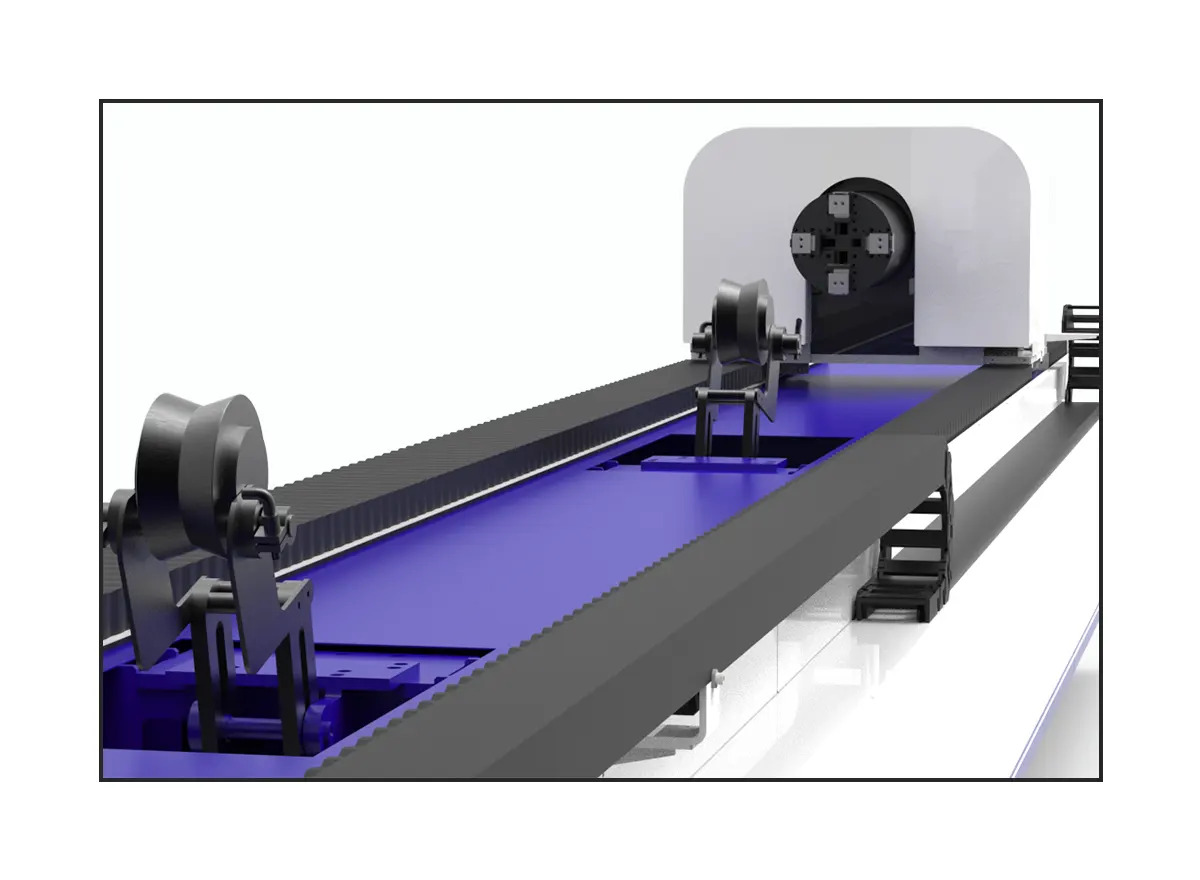
Modern tube laser cutting machines often employ multiple chucks to facilitate continuous material feeding and processing. This multi-chuck configuration is key to handling longer raw material lengths efficiently and is a primary factor in minimizing residual material waste.
Multiple chucks allow for the seamless transfer of the tube as it is processed, maintaining constant control and stability. This continuous feed mechanism is essential for achieving the elusive “zero tailing” goal, maximizing material yield and profitability.
The 3-Chuck Tube Laser System
The 3-chuck tube laser system is a widely adopted configuration in the metal fabrication industry, offering a balanced approach to performance and cost-effectiveness. It typically consists of a front chuck, a middle chuck, and a rear chuck, working in tandem to support and move the tube.
This setup is well-suited for a broad range of applications, particularly for standard tube lengths and profiles where a certain amount of material tailing is deemed acceptable or manageable. Its design often prioritizes ease of operation and a lower initial investment.
Configuration and Operation
In a typical 3-chuck system, the front chuck is located near the laser cutting head, holding the tube section currently being processed. The rear chuck often serves as a feeder, pushing the raw material forward from the loading zone.
A third, usually fixed, middle chuck provides additional support and stability as the tube moves through the machine. The tube is fed incrementally, with the chucks repositioning and re-clamping at specific intervals to advance the material.
Advantages of 3-Chuck Systems
3-chuck tube lasers offer several compelling advantages, making them an attractive option for many manufacturers. Their relative simplicity in design and operation translates to lower maintenance requirements and easier troubleshooting.
- Cost-Effectiveness: Generally, 3-chuck systems have a lower initial purchase price compared to their 4-chuck counterparts, making them accessible for businesses with budget constraints or smaller production volumes.
- Ease of Operation: The control systems for 3-chuck machines are often less complex, leading to a shorter learning curve for operators and simpler programming.
- Versatility for Standard Applications: They are highly effective for cutting a wide range of common tube shapes and sizes, fulfilling the needs of many general fabrication tasks.
Limitations of 3-Chuck Systems Regarding Tailing
Despite their advantages, 3-chuck systems inherently face limitations when it comes to minimizing material waste, specifically the “tailing” issue. The design necessitates leaving a certain length of material unclampable at the end of the tube.
As the tube nears its end, the last remaining segment must be held by the rear chuck, preventing the laser from cutting all the way to the very end. This results in an unusable scrap piece, commonly referred to as the tail, impacting material yield and increasing operational costs.
- Inherent Tailing: A significant length of material remains as scrap at the end of each tube.
- Material Loss: This tailing accumulates over time, leading to substantial material waste, especially in high-volume production environments.
- Secondary Operations: The unusable tail often requires manual removal or secondary cutting processes, adding labor and time to the production cycle.
The 4-Chuck Tube Laser System
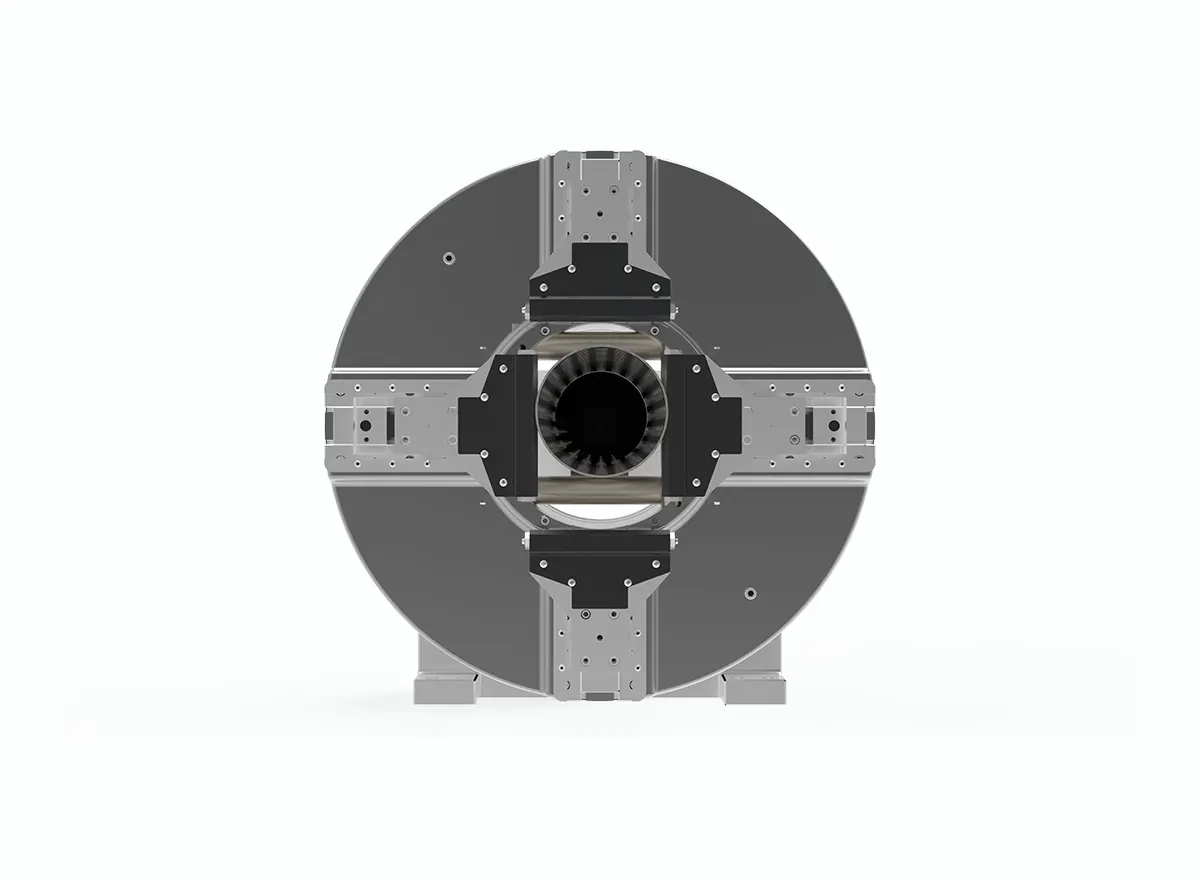
The 4-chuck tube laser system represents a significant advancement in tube processing technology, specifically engineered to overcome the limitations of 3-chuck setups, particularly regarding material waste. This configuration is a premium solution for manufacturers seeking maximum material utilization and superior precision.
Equipped with an additional chuck, these systems offer enhanced control, stability, and the unique ability to achieve truly minimal or “zero” tailing. They are designed for demanding applications where efficiency and raw material cost savings are paramount.
Advanced Configuration and Operation
A 4-chuck system typically features two fixed chucks (front and rear) and two mobile chucks. This dynamic arrangement allows for a continuous and uninterrupted cutting process, even as the tube approaches its end.
As the tube gets shorter, one of the mobile chucks takes over the clamping duty from the other, allowing the cutting head to process almost the entire length of the tube. This seamless hand-off ensures that the material is always securely held and precisely positioned for cutting.
Achieving Zero Tailing with 4-Chuck Systems
The hallmark benefit of a 4-chuck system is its unparalleled ability to minimize or virtually eliminate material tailing. This is achieved through the coordinated movement and transfer capabilities of the four chucks.
The additional chuck allows the machine to grip the tube extremely close to the cutting point, enabling the laser to cut nearly to the very end of the material. This drastically reduces the scrap length to a negligible amount, often just a few millimeters, or in some advanced systems, true zero tailing.
- Maximized Material Yield: By reducing the tail length, manufacturers can extract more usable parts from each raw tube, significantly increasing material utilization.
- Substantial Cost Savings: Over time, the cumulative savings from reduced scrap material can be substantial, leading to a strong return on investment.
- Environmental Benefits: Less material waste contributes to a more sustainable manufacturing process, aligning with modern industrial environmental goals.
Additional Advantages of 4-Chuck Systems
Beyond zero tailing, 4-chuck systems offer a suite of other advantages that enhance overall processing capabilities and efficiency. These benefits often justify the higher initial investment for companies with high-volume or complex production needs.
- Improved Stability for Longer and Heavier Profiles: The four points of contact provide superior support, crucial for processing long, heavy, or thin-walled tubes without deflection or vibration.
- Higher Precision and Accuracy: Enhanced stability directly translates to greater cutting accuracy and repeatability, vital for tight tolerances and complex geometries.
- Faster Processing Speeds: Continuous, uninterrupted feeding and cutting reduce cycle times, leading to higher throughput and increased production capacity.
- Greater Automation Potential: The advanced control over material handling integrates well with automated loading and unloading systems, further streamlining the manufacturing workflow.
- Reduced Distortion: Better support throughout the cutting process can minimize heat-induced distortion in sensitive materials or profiles.
Considerations and Disadvantages
While offering significant benefits, 4-chuck systems also come with certain considerations that industrial buyers must evaluate. These factors mainly revolve around the initial investment and operational complexity.
- Higher Initial Investment: The advanced mechanics and control systems of a 4-chuck machine result in a higher purchase price compared to 3-chuck models.
- More Complex Mechanics and Control Systems: The intricate coordination required for four chucks demands sophisticated engineering, potentially leading to a steeper learning curve for operators and maintenance staff.
- Maintenance Considerations: While robust, the increased number of moving parts and sensors might entail more involved maintenance routines.
Direct Comparison: 4-Chuck vs. 3-Chuck for Zero Tailing
When deciding between a 3-chuck and a 4-chuck tube laser, the primary differentiator often centers on the ability to achieve zero tailing and its subsequent impact on operational economics. This comparison goes beyond initial purchase price to consider long-term efficiency and profitability.
Understanding these critical differences will empower manufacturers to make an informed decision that aligns with their specific production goals and material optimization strategies.
Material Utilization and Cost Savings
The most direct comparison point is the amount of material waste generated. A 3-chuck system, by design, leaves a substantial tail, typically between 200mm and 500mm or more, which translates directly into scrap.
A 4-chuck system, by contrast, reduces this tail to mere millimeters, effectively utilizing almost 100% of the raw tube material. For high-volume manufacturers, the cumulative savings from reduced material waste can amount to hundreds of thousands of dollars annually, providing a compelling return on investment.
Precision and Part Quality
Both systems offer high precision for tube cutting, but the enhanced stability of a 4-chuck system often provides a slight edge. The multiple gripping points minimize vibration and deflection, which is crucial for achieving extremely tight tolerances on intricate parts or when processing long, thin-walled tubes.
Reduced material movement also translates to cleaner cuts and less potential for distortion, particularly important for aerospace, automotive, or medical applications where part quality is paramount.
Production Efficiency and Throughput
The continuous processing capability of a 4-chuck system inherently leads to higher production efficiency. The seamless hand-off between chucks reduces pauses in the cutting process, allowing for faster cycle times and greater throughput.
While a 3-chuck system is efficient for many tasks, the need for occasional re-clamping or manual tail removal can introduce minor bottlenecks in high-volume, continuous operations. For manufacturers focused on maximizing parts per hour, the 4-chuck system typically delivers superior performance.
Flexibility and Material Compatibility
Both systems are highly flexible regarding the types of tubes and profiles they can cut. However, the superior gripping and support of a 4-chuck system make it particularly advantageous for challenging materials or dimensions.
-
- 4-Chuck: Excels with extra-long tubes, heavy-gauge pipes, or delicate thin-walled profiles where maintaining rigidity is critical. It offers greater versatility for a wider range of material types and cross-sections without compromising stability.
- 3-Chuck: Perfectly adequate for standard lengths, medium-to-light gauge materials, and common tube shapes. It remains a workhorse for many general fabrication needs.
Comparing 4-Chuck vs. 3-Chuck Tube Laser Systems
| Feature | 3-Chuck System | 4-Chuck System |
|---|---|---|
| Material Waste | Higher | Extremely Low |
| Tailing | Moderate | Near Zero |
| Stability | Good | Excellent |
| Long Tube Support | Limited | Superior |
| Precision | High | Very High |
| Automation | Moderate | Advanced |
| Initial Cost | Lower | Higher |
| ROI in High Volume | Moderate | Strong |
Which One Should You Choose? Making the Right Investment
The decision between a 3-chuck and a 4-chuck tube laser system is a strategic one, requiring a thorough assessment of your specific operational needs, production volume, and long-term business objectives. There is no universally “better” option; rather, the optimal choice is the one that best aligns with your manufacturing profile.
Consider the interplay of initial capital outlay versus ongoing operational savings, and the types of projects you typically undertake. Your investment should empower your business for sustainable growth and efficiency.
Factors to Consider
Evaluating these key factors will help narrow down the choice and ensure you invest in the most suitable technology for your facility.
- Production Volume and Material Consumption: How much material do you process annually? High volumes amplify the financial impact of even small amounts of tailing.
- Tube Dimensions and Material Types: Are you working with standard lengths and gauges, or do your projects frequently involve very long, heavy, or delicate tubes?
- Budget Constraints: What is your available capital for the initial machine purchase? Balance this against potential long-term savings.
- Desired Level of Automation: How critical is hands-free operation and integration with other automated systems in your facility?
- Importance of Minimal Waste: How much value do you place on reducing scrap, both for cost savings and environmental sustainability?
When to Opt for a 3-Chuck System
A 3-chuck tube laser system is an excellent choice for manufacturers with specific operational profiles where its advantages truly shine.
- Smaller Operations or Lower Volume Production:** If your annual tube consumption is moderate, the cost savings from “zero tailing” might not outweigh the higher initial investment of a 4-chuck machine.
- Standard Part Lengths and Profiles: For businesses primarily cutting standard components where the tailing length is a manageable percentage of the total tube, a 3-chuck system offers ample capability.
- Budget-Conscious Initial Investment: When capital expenditure is a significant concern, a 3-chuck system provides a powerful and reliable tube cutting solution at a more accessible price point.
- Less Emphasis on Absolute Minimal Waste: If secondary operations to process the tail are already integrated into your workflow or if the scrap value is low, the material loss might be less impactful.
When to Opt for a 4-Chuck System
For manufacturers looking to push the boundaries of efficiency, material utilization, and precision, the 4-chuck system offers an unmatched suite of benefits.
- High-Volume Production: In environments where hundreds or thousands of tubes are processed weekly, the cumulative material savings from zero tailing become substantial and rapidly justify the investment.
- Complex Parts, Long Tubes, or Heavy Profiles: If your work involves intricate cuts, very long structural tubes, or heavy-duty pipes, the enhanced stability and precision of a 4-chuck system are invaluable.
- Critical Need for Minimal Material Waste and High Yield: Industries where raw material costs are high (e.g., stainless steel, aluminum, exotic alloys) or where environmental initiatives demand maximum resource efficiency will benefit immensely.
- Long-Term Operational Cost Savings: Businesses focused on total cost of ownership (TCO) will recognize the significant long-term savings generated by drastically reduced scrap and increased throughput.
- Desire for Advanced Automation: The seamless operation of a 4-chuck system integrates perfectly with automated loading/unloading systems, paving the way for lights-out manufacturing.
Conclusion
Choosing between a 3-chuck and a 4-chuck tube laser cutting system depends on your production goals, material usage, and long-term profitability strategy. A 3-chuck system remains a reliable and cost-effective option for standard fabrication work. However, manufacturers aiming for maximum material utilization, higher automation, and near-zero tailing often prefer a 4-chuck system.
Modern industries are moving toward smarter manufacturing where every millimeter of material matters. Therefore, investing in the right tube laser technology can directly impact operational efficiency and business growth.
SLTL also organizes live Demo Days where manufacturers can experience tube cutting machines in real production conditions. You can register for the Tube Cutting Machine Live Demo and explore advanced tube laser cutting technology firsthand. For more details about SLTL’s advanced laser solutions, contact the team today at +919925036495 or email mkt@sltl.com. You can also explore the complete product range at www.sltl.com.
FAQs
1. How do I know whether I need a 3-chuck or 4-chuck tube laser cutting machine?
You should choose based on your production volume, material cost, and cutting requirements. If you mainly process standard tubes with moderate production, a 3-chuck system can work well for you. However, if you want near-zero tailing, better material savings, and higher automation, a 4-chuck tube laser cutting machine becomes a better long-term investment.
2. Will a 4-chuck tube laser cutting machine really reduce my material waste?
Yes, you can significantly reduce material waste with a 4-chuck system. The additional chuck allows the machine to hold the tube closer to the cutting area. Because of this, you can cut almost the complete tube length and reduce scrap generation during production.
3. Can I use a 4-chuck tube laser cutting machine for heavy structural tubes?
Yes, you can process heavy and long structural profiles more efficiently with a 4-chuck system. The four-point support improves stability during cutting. This helps you maintain precision even while processing large tubes used in construction, automotive parts, and the PEB industry.
4. Will a 3-chuck tube laser cutting machine be enough for my small fabrication business?
Yes, you can start efficiently with a 3-chuck system if your production volume is moderate and your material wastage is manageable. Many small and medium fabrication businesses use 3-chuck machines because they offer reliable performance with a lower initial investment.
5. How much tailing can I reduce with a 4-chuck tube laser system?
You can reduce tailing to just a few millimeters in many applications. Compared to traditional systems that leave a larger scrap section, a 4-chuck machine helps you utilize almost the entire tube length, especially in high-volume production environments.
6. Can I automate my factory with a 4-chuck tube laser cutting machine?
Yes, you can integrate a 4-chuck system with automated loading and unloading solutions. This helps you reduce manual handling, improve productivity, and achieve smoother production flow in modern smart manufacturing environments.
7. Will a 4-chuck machine improve cutting accuracy for complex parts?
Yes, you can achieve better accuracy because the tube remains more stable during cutting. Reduced vibration and improved support help you maintain tighter tolerances for complex tube profiles and precision components.
8. Can I process different tube shapes with these tube laser cutting machines?
Yes, you can process round, square, rectangular, and many custom tube profiles using advanced tube laser cutting machines. Modern systems are designed to handle multiple profile types across different manufacturing industries.
9. How does tube nesting software help me reduce production costs?
You can improve material utilization through optimized nesting layouts. Software like SLTL Bolt helps you reduce scrap, improve production planning, and maximize the number of usable parts from every tube.
10. Can I see the tube cutting machine before purchasing it?
Yes, you can visit SLTL Demo Days and explore live tube cutting machine demonstrations. This allows you to understand machine performance, cutting quality, automation capabilities, and production efficiency before making your investment decision.
11. Will a high power laser cutting machine help me process thicker materials faster?
Yes, you can process thicker metal sections with better speed and efficiency using a high power laser cutting machine. These machines are designed for demanding industrial applications where productivity and precision are equally important.
12. Can I use SLTL machines for industries like aerospace, medical devices, and automotive parts?
Yes, you can use SLTL laser systems across multiple industries including aerospace, medical devices, automotive parts, electronics, construction, jewellery, and the PEB industry. Different machine configurations are available depending on your application requirements.
13. How can a laser welding machine improve my fabrication process?
You can achieve cleaner welds, lower heat distortion, and faster processing with a laser welding machine. This helps you improve product quality while reducing post-processing work and operational time.
14. Is a handheld laser welding machine suitable for flexible workshop operations?
Yes, you can easily handle repair work, custom fabrication, and flexible welding applications with a handheld laser welding machine. It is especially useful for workshops looking for portability and ease of operation.
15. How do I contact SLTL or register for the live tube cutting machine demo?
You can contact SLTL directly at +919925036495 or email mkt@sltl.com for machine consultation and demo registration. You can also register online through the Tube Cutting Machine Live Demo page and experience the machines live.
Author Bio

Mayank Patel
R&D HeadMayank Patel is the Head of Research & Development at SLTL Group, bringing over 20+ years of hands-on experience in the field of laser technology. A forward-thinking innovator, he has played a pivotal role in developing advanced laser cutting, welding, and marking solutions tailored for diverse industries. Under his leadership, SLTL’s R&D division continues to push the boundaries of what laser systems can achieve in modern manufacturing.