Industry 4.0: Transform Laser Manufacturing with SLTL

Patented Laser Technology

IoT, AI, ANN, Industry 4.0

ISO & CE Certified

Industry First Solutions

Smart Manufacturing with Industry 4.0

Smarter manufacturing powered by Industry 4.0, connecting laser technology, automation, and real-time data for faster, more efficient production.

Industry 4.0

Industry 4.0 represents the next stage of industrial transformation where machines, software, and data work together to create smarter and more efficient manufacturing environments. It connects production equipment such as laser cutting machines, laser welding systems, and laser marking machines with intelligent technologies like automation, artificial intelligence, and real-time monitoring.

Instead of traditional manual operations, Industry 4.0 allows factories to operate with data-driven decisions, predictive insights, and connected systems. This improves productivity, reduces downtime, and ensures better quality control across manufacturing processes.

With Industry 4.0 integration, businesses can monitor performance, optimize workflows, and achieve consistent production results with higher efficiency.
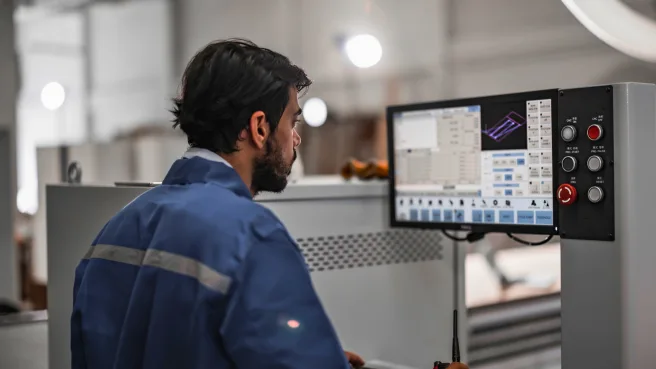
Feature of Industry 4.0

Top Features
  • Real-Time Machine Monitoring
  • Predictive Maintenance for Laser Machines
  • Improved Production Efficiency
  • Data-Driven Decision Making
  • Smart Automation and Reduced Human Error
  • Enhanced Quality Control and Traceability
  • Energy Efficiency and Cost Reduction
  • Remote Monitoring and Control
  • Better Integration Between Machines and Systems
Real-Time Machine Monitoring

Real-Time Machine Monitoring

One of the biggest strengths of Industry 4.0 is real-time monitoring of machines. In traditional factories, operators often rely on manual inspection or periodic checks to understand machine performance. With Industry 4.0, laser cutting machines, laser welding systems, and laser marking machines are connected through smart sensors and software that continuously track performance.

This means manufacturers can instantly see whether machines are running, idle, or facing issues. Production managers can monitor multiple machines from a centralized dashboard without being physically present on the shop floor. Real-time monitoring helps identify bottlenecks quickly, reducing delays in production.

For example, if a laser cutting machine slows down due to improper gas pressure or parameter mismatch, Industry 4.0 systems can immediately alert operators. This prevents long production interruptions and maintains consistent workflow.

Another major advantage is transparency. Managers, operators, and maintenance teams all have access to the same data, which improves communication and decision-making. Instead of reacting after problems occur, teams can take proactive action.

Overall, real-time monitoring improves productivity, reduces downtime, enhances machine utilization, and ensures that laser manufacturing processes operate smoothly and efficiently.

Predictive Maintenance for Laser Machines

Predictive Maintenance for Laser Machines

Industry 4.0 allows predictive maintenance, which is a major shift from traditional reactive maintenance. Instead of waiting for machines to break down, smart systems analyze machine data and predict when maintenance is required.

Laser cutting machines and laser welding systems involve complex components such as optics, cooling systems, motion systems, and gas controls. If any of these fail unexpectedly, production stops and repair costs increase. Industry 4.0 technology monitors vibration, temperature, energy consumption, and operating patterns to detect early signs of wear or failure.

For example, if a laser marking machine shows unusual power fluctuation, the system can generate alerts before the issue becomes serious. Maintenance teams can schedule service at the right time, preventing unexpected downtime.

Predictive maintenance improves machine lifespan because problems are addressed early. It also reduces emergency repairs and spare part costs. Production planning becomes more reliable since machines are less likely to fail suddenly.

In laser manufacturing environments where precision and uptime are critical, predictive maintenance helps maintain continuous production while lowering operational risks. It also increases safety by reducing sudden mechanical failures.

Improved Production Efficiency

Improved Production Efficiency

Industry 4.0 significantly increases production efficiency by connecting machines, workflows, and data systems. Laser cutting, laser welding, and laser marking processes often involve multiple steps that need coordination. Industry 4.0 ensures that each stage of production communicates with the next.

Automation allows machines to adjust parameters automatically based on material type, thickness, or job requirements. This reduces manual intervention and minimizes human error. For example, a laser cutting machine can automatically optimize cutting speed and power settings to improve output quality.

Production data collected through Industry 4.0 systems helps manufacturers identify inefficiencies such as excessive idle time or slow changeovers. Once these issues are identified, process improvements can be implemented quickly.

Another benefit is improved scheduling. Industry 4.0 systems help plan jobs efficiently by analyzing machine availability and workload. This ensures maximum machine utilization.

Overall, improved efficiency means faster production cycles, reduced material waste, and consistent output quality. For laser manufacturers, this translates into higher productivity and better profitability.

Data-Driven Decision Making

Data-Driven Decision Making

Industry 4.0 transforms manufacturing by using data as the foundation for decision-making. Instead of relying on assumptions or manual reports, businesses can use real-time data to make informed decisions.

Laser cutting machines generate data about cutting speed, energy usage, material performance, and production output. Laser welding and marking machines also produce valuable insights related to quality and process stability.

By analyzing this data, manufacturers can identify trends and optimize operations. For example, if certain materials require more processing time, production planning can be adjusted accordingly.

Data-driven decision-making also helps improve quality control. If a recurring defect is detected, operators can analyze the root cause using machine data.

Another advantage is cost optimization. Energy usage and material consumption data help businesses reduce waste and control operational expenses.

Industry 4.0 ensures that decisions are based on real facts rather than guesswork. This leads to better planning, improved efficiency, and stronger long-term growth for laser manufacturing companies.

Smart Automation and Reduced Human Error

Smart Automation and Reduced Human Error

Industry 4.0 enables smart automation where machines operate with minimal manual intervention. Automation reduces repetitive tasks and improves accuracy in laser manufacturing.

For example, laser cutting machines can automatically load programs, adjust focus settings, and monitor cutting quality. Laser welding systems can maintain consistent welding parameters without constant manual adjustment.

Automation reduces the risk of human errors such as incorrect parameter selection or improper setup. This leads to better product consistency and fewer rejected parts.

Operators can focus on higher-value tasks like quality inspection or process optimization rather than routine operations. Automation also increases safety by reducing human interaction with high-power laser systems.

Overall, smart automation improves productivity, enhances safety, and ensures consistent manufacturing results.

Enhanced Quality Control and Traceability

Enhanced Quality Control and Traceability

Industry 4.0 improves quality control by tracking every step of the manufacturing process. Laser marking machines play an important role in traceability by applying permanent markings such as serial numbers or QR codes.

Connected systems store data about production parameters, materials used, and machine settings. If quality issues occur, manufacturers can quickly trace back to identify the root cause.

This level of traceability is especially important in industries like automotive, aerospace, and medical manufacturing where quality standards are strict.

Real-time monitoring ensures that deviations are detected immediately, reducing defective production. Automated alerts help maintain consistent quality across batches.

Overall, Industry 4.0 ensures higher product reliability and compliance with industry standards.

Energy Efficiency and Cost Reduction

Energy Efficiency and Cost Reduction

Industry 4.0 systems monitor energy consumption across laser machines. By analyzing energy usage patterns, manufacturers can identify areas where energy is wasted.

Laser cutting machines can automatically adjust power levels to match job requirements, reducing unnecessary energy usage. Smart scheduling can also run machines during optimal energy periods.

Reducing energy consumption lowers operational costs and supports sustainability goals. Industry 4.0 helps manufacturers balance productivity with environmental responsibility.

Remote Monitoring and Control

Remote Monitoring and Control

Industry 4.0 allows manufacturers to monitor machines remotely through cloud-based systems. Managers can track production status even when they are not on-site.

Remote monitoring helps global teams manage multiple factories efficiently. Alerts and notifications ensure quick response to problems.

This capability increases flexibility and reduces response time to production issues.

Better Integration Between Machines and Systems

Better Integration Between Machines and Systems

Industry 4.0 connects different machines and software platforms into one ecosystem. Laser cutting, welding, and marking machines can share data with ERP systems, MES platforms, and quality management tools.

This integration improves workflow coordination and reduces manual data entry.

CONNECT WITH US


    Happy to Help

    24*7 service support and technical assistance. You’re welcome to visit our office for other insights

    mkt@SLTL.com +91-9925036495

    Address:

    E-30, Electronic Estate, G. I. D. C.,
    Sector - 26, Gandhinagar - 382 028
    Gujarat, India.