Laser cutting, welding, and marking technologies help tool rooms reduce secondary machining operations such as deburring, grinding, and rework. This blog explains how laser systems improve precision, reduce finishing steps, lower costs, and increase manufacturing efficiency.
Now a days, modern manufacturing is more focused on speed, precision, and cost efficiency. In traditional machining environments, tool rooms often require multiple finishing operations such as grinding, deburring, drilling, polishing, and marking after the initial manufacturing stage. These additional steps are collectively called secondary machining.
However, the introduction of advanced laser technologies, especially the Laser cutting machine, laser welding machine, and Laser marking machine, has significantly reduced or even eliminated the need for many of these secondary operations. Laser-based manufacturing processes provide high precision, minimal material distortion, and clean edges, which reduces the requirement for post-processing.
If you want to understand how automation directly impacts profitability, you can also read our blog on How Much ROI Are Manufacturers Losing Without Smart Laser Automation? (How SLTL Can Help) which explains the financial impact of outdated machining processes.
In this blog, we will see how laser technology can transform your tool room by reducing secondary machining, improving productivity, and helping you achieve better manufacturing efficiency.
Understanding Secondary Machining in Tool Rooms
Secondary machining refers to additional finishing operations performed after the primary manufacturing process to achieve the required surface quality, dimensional accuracy, or functionality.
Common Secondary Machining Processes
Typical secondary processes in tool rooms include:
- Deburring
- Grinding and polishing
- Re-drilling or reaming
- Surface finishing
- Marking or engraving
- Manual fitting and alignment
These processes increase production time, labor costs, and material waste. In industries such as automotive, aerospace, die & mold, and precision engineering, minimizing these extra steps is essential for faster turnaround and improved productivity.
Why Traditional Machining Requires Secondary Operations
Conventional machining techniques such as milling, punching, and plasma cutting often produce imperfections that require additional finishing.
Major Issues with Conventional Methods
- Burr Formation: Mechanical cutting tools create burrs along edges, which must be removed using deburring or grinding.
- Tool Wear and Inaccuracy: Physical contact between the tool and workpiece leads to tool wear, causing dimensional inaccuracies.
- Heat Distortion: Some traditional processes generate large heat-affected zones, leading to warping or structural changes in materials.
- Multiple Tool Changes: Conventional machining often requires different tools for cutting, drilling, engraving, and welding.
Laser technology addresses many of these issues in a single automated process, dramatically reducing secondary machining requirements.
Role of Laser Technology in Modern Tool Rooms
Laser-based manufacturing uses a high-energy focused beam to cut, weld, mark, or engrave materials with extreme precision.
Laser systems are widely used in:
- Sheet metal fabrication
- Tool and die manufacturing
- Automotive components
- Electronics manufacturing
- Aerospace components
You can also explore how combining multiple laser processes improves operational efficiency in our detailed blog How Combining Laser Cutting, Welding and Marking Machine Reduces Operational Costs.
One of the biggest advantages of laser processing is that it is non-contact machining, meaning the laser beam does not physically touch the workpiece. This eliminates tool wear and significantly improves accuracy. As a result, laser-based manufacturing often produces near-net-shape components, reducing the need for additional finishing processes.
How Laser Cutting Machines Reduce Secondary Machining
A Laser cutting machine is one of the most widely used technologies in tool rooms today. It uses a focused laser beam to melt, burn, or vaporize material, producing highly precise cuts.
Burr-Free Cutting
Traditional mechanical cutting produces burrs that require grinding or deburring. Laser cutting generates clean and smooth edges, reducing the need for post-processing. Laser machining is known for producing clean surfaces without post-machining burrs, which simplifies finishing operations.
High Dimensional Accuracy
Laser beams can be focused to extremely small diameters, allowing micron-level precision in cutting complex geometries. This high precision ensures:
- Accurate part dimensions
- Reduced need for re-machining
- Minimal tolerance corrections
Reduced Heat-Affected Zone
A Laser cutting machine generates a narrow heat-affected zone compared to conventional thermal cutting methods. Which means:
- Less material distortion
- Minimal warping
- Better surface quality
As a result, tool room components can often be used directly after cutting.
Complex Geometry in One Process
Laser cutting can create intricate shapes, holes, slots, and contours in a single operation. This eliminates secondary processes like:
- Drilling
- Milling
- Slotting
The ability to produce complex geometries directly from CAD designs significantly reduces production steps.
How Laser Welding Machines Reduce Finishing Operations
A laser welding machine joins materials using a highly concentrated laser beam. Compared to conventional welding techniques such as MIG or TIG welding, laser welding offers superior precision and minimal distortion.
Narrow and Clean Welds
Laser welding produces extremely narrow weld seams, reducing the need for grinding or polishing. Benefits include:
- Smooth weld appearance
- Reduced filler material usage
- Minimal weld spatter
Smaller Heat-Affected Zone
Laser welding concentrates heat in a small area, which reduces thermal distortion in the workpiece. Advantages include:
- Improved structural integrity
- Reduced warping
- Less need for straightening operations
High Repeatability
Laser welding systems can be integrated with CNC or robotic systems to achieve highly repeatable results. This eliminates secondary steps such as:
- Rewelding
- Manual adjustments
- Surface corrections
Precision for Micro Components
In industries such as electronics and medical devices, precision welding is critical. Laser welding allows joining of extremely small parts without damaging surrounding areas. This reduces finishing processes significantly.
Role of Laser Marking Machines in Tool Rooms
Marking and engraving are essential processes in tool rooms for identification, traceability, and branding. Traditionally, marking involved processes such as:
- Mechanical engraving
- Ink printing
- Stamping
These methods often required additional finishing or cleaning steps.
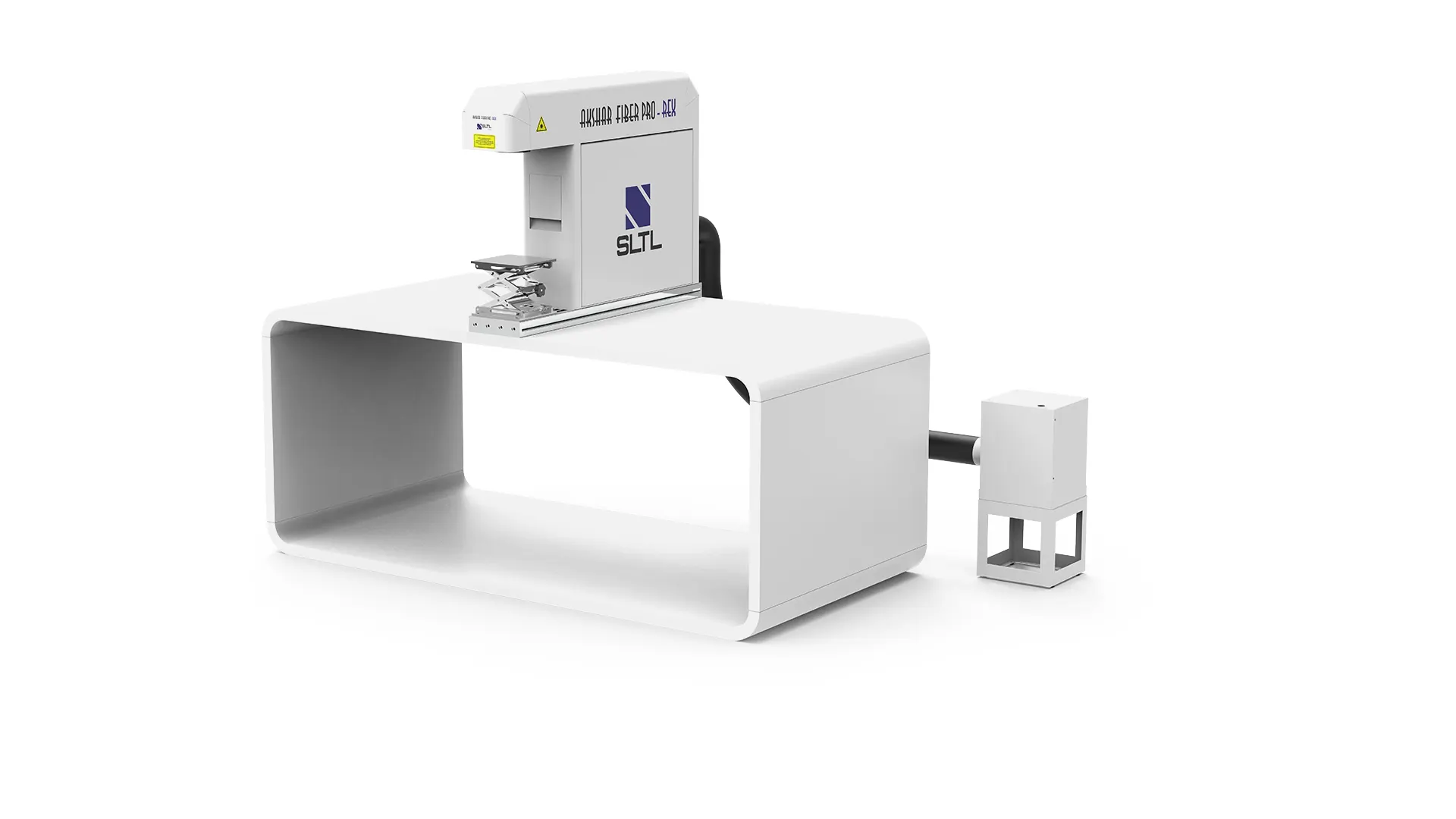
A Laser marking machine solves these problems by directly engraving information onto the surface without physical contact.
Advantages of Laser Marking
Permanent Marking
Laser marks are resistant to wear, heat, and chemicals.
High Precision: Extremely fine text, barcodes, and QR codes can be engraved accurately.
No Consumables: Unlike ink-based marking, laser marking requires no consumables.
No Post Processing: Since the marking is clean and precise, no secondary finishing is required.
Laser marking is widely used for:
- Serial numbers
- QR codes
- Product branding
- Tool identification
Integration of Laser Systems in Smart Tool Rooms
Modern tool rooms are evolving into smart manufacturing environments where automation and digital technologies are integrated with laser systems.
Key Integrations:
- CAD/CAM Integration: Laser machines can directly process CAD designs, eliminating manual programming errors.
- CNC Automation: Laser systems combined with CNC allow automatic cutting, welding, and marking operations.
- Robotic Integration: Robots can handle components while lasers perform machining tasks, improving productivity.
- Industry 4.0 Connectivity: Laser machines can be connected to monitoring systems for real-time performance tracking.
These integrations help tool rooms achieve:
- Faster production cycles
- Higher consistency
- Reduced manual intervention
Cost Benefits of Reducing Secondary Machining
Reducing secondary operations offers significant economic advantages for manufacturers.
- Reduced Labor Costs: Manual finishing operations require skilled labor. Laser systems automate many of these processes.
- Faster Production Cycles: Eliminating additional machining steps shortens the overall production timeline.
- Lower Material Waste: Precision cutting reduces scrap and rework.
- Reduced Tool Wear: Since laser machining is non-contact, there is minimal tool wear and maintenance.
- Improved Product Quality: Laser-based processes provide consistent and repeatable results.
These benefits contribute to higher profitability and better return on investment for manufacturers.
Industries Benefiting from Laser-Based Tool Rooms
Several industries have already adopted laser technology to reduce secondary machining.
Automotive Industry
Laser cutting and welding are widely used for chassis components, exhaust systems, and battery enclosures. You can learn more about SLTL solutions for the automotive parts industry here: Automotive Parts Laser Solutions
Aerospace Industry
Laser machining is used for high-precision components where tolerance requirements are extremely tight. Explore SLTL laser solutions designed for the aerospace industry here: Aerospace Laser Manufacturing Solutions
Construction and Heavy Equipment
Laser technology is increasingly used in fabrication of heavy structural components and equipment used in construction and infrastructure. Learn more about SLTL laser solutions for the construction industry here: Construction Industry Laser Solutions
Electronics Manufacturing
Laser marking and micro-welding enable precise assembly of small components
Die and Mold Industry
Laser technology helps create complex mold cavities and detailed engravings without extensive finishing.
Future of Laser Technology in Tool Rooms
The future of tool room manufacturing is closely tied to advancements in laser technology. Emerging innovations include:
- AI-driven laser machining optimization
- Hybrid laser manufacturing systems
- High-power fiber lasers
- Real-time process monitoring systems
These technologies will further reduce the need for secondary machining by improving process control, precision, and automation.
Conclusion
Laser technology has revolutionized modern tool rooms by significantly reducing the need for secondary machining operations. Advanced systems such as the Laser cutting machine, laser welding machine, and Laser marking machine enable manufacturers to produce highly accurate components with minimal finishing requirements.
Unlike traditional machining methods, laser processing offers non-contact manufacturing, micron-level precision, and clean edges, which greatly reduces burr formation, distortion, and manual finishing work. As manufacturing industries continue to adopt automation and Industry 4.0 technologies, laser systems will play an even more critical role in improving productivity, reducing costs, and enhancing product quality.
If you want to see these technologies in action, you can also connect with the SLTL team directly or visit us during industry exhibitions such as Indus-tech 2026 and Metal Forming Expo 2026, where we demonstrate real manufacturing solutions for modern tool rooms.
For tool rooms aiming to stay competitive in today’s fast-paced manufacturing landscape, investing in laser technology is no longer optional, it is a strategic necessity.
Frequently Asked Questions (FAQs)
1. I am currently using traditional cutting machines. Why should I consider laser technology?
If you are using traditional cutting methods, you may be spending extra time on grinding, deburring, and reworking parts. With laser technology, you can produce cleaner cuts and more accurate parts, which means you spend less time on finishing operations and improve overall productivity.
2. I often face burr formation after cutting. Can laser cutting help solve this problem?
Yes, it can. Laser cutting produces very clean edges compared to mechanical cutting. Because of this, you usually do not need additional deburring or grinding, which saves time and labor.
3. My current process requires multiple machines for cutting, drilling, and marking. Can laser systems reduce these steps?
Yes. With laser technology, you can perform multiple operations such as cutting complex shapes, creating holes, and even marking components in a single setup. This reduces the need for multiple machines and extra handling.
4. I worry that switching to laser machines will be difficult for my tool room. Is it complicated to adopt?
You do not need to worry. Modern laser machines are designed to integrate easily with CAD/CAM systems and CNC automation. With proper training and setup, you can quickly start using them in your existing workflow.
5. I deal with precision parts. Can laser machines provide better accuracy than traditional machining?
Yes, they can. Laser machines can achieve very high precision because the laser beam is extremely focused. This helps you produce complex geometries and tight tolerances with minimal rework.
6. My current welding process causes distortion in parts. Can laser welding improve this?
Laser welding focuses heat in a very small area, which means less heat spreads into the surrounding material. Because of this, you experience less warping, cleaner welds, and fewer finishing operations.
7. I currently use stamping or engraving for marking parts. Why should I use laser marking instead?
Laser marking allows you to create permanent markings such as serial numbers, QR codes, and logos directly on the surface without physical contact. This means you get precise, clean marks without needing extra cleaning or finishing steps.
8. Will laser machines actually reduce my production costs?
Yes. When you reduce secondary machining operations like grinding, polishing, and reworking, you save on labor, time, and material waste. Over time, this improves your production efficiency and overall return on investment.
9. I manufacture parts for industries like automotive or aerospace. Is laser technology suitable for these sectors?
Yes, it is widely used in these industries. Laser cutting, welding, and marking are commonly used for high-precision components where accuracy, consistency, and speed are critical.
10. I want to understand if laser technology fits my current manufacturing setup. How can I evaluate it?
You can start by reviewing your current processes and identifying where secondary machining takes the most time. You can also connect with laser technology providers for demonstrations or consultations to see how the machines would fit into your production environment.
Author Bio

Mayank Patel
R&D HeadMayank Patel is the Head of Research & Development at SLTL Group, bringing over 20+ years of hands-on experience in the field of laser technology. A forward-thinking innovator, he has played a pivotal role in developing advanced laser cutting, welding, and marking solutions tailored for diverse industries. Under his leadership, SLTL’s R&D division continues to push the boundaries of what laser systems can achieve in modern manufacturing.