PEB manufacturing is changing fast, and those still using old cutting methods are falling behind. Fiber laser cutting brings speed, precision, and lower costs. Upgrade now or risk losing efficiency, quality, and competitive edge.
Introduction
In today’s fast-evolving construction landscape, the demand for faster project execution, optimized material usage, and high structural reliability has led to the rapid adoption of Pre-Engineered Buildings (PEBs). These steel-based structures have transformed the way industrial, commercial, and infrastructure projects are designed and delivered by shifting a major portion of construction from on-site activities to controlled factory environments.
At the same time, the efficiency of PEB manufacturing in India is no longer defined only by design and fabrication practices-it is increasingly driven by the precision and speed of advanced processing technologies. Among these, fiber laser cutting machines have emerged as a game-changing solution, enabling manufacturers to achieve unmatched accuracy, repeatability, and production efficiency. From cutting primary structural members like columns and rafters to producing intricate connection plates and secondary components, fiber laser technology ensures that every element meets stringent dimensional and quality requirements.
This article explores how the integration of fiber laser cutting machine into PEB manufacturing is redefining fabrication standards. It covers the complete workflow, component-level processing, material optimization strategies, and the role of automation in modern smart factories-offering a comprehensive understanding of how precision-driven manufacturing is shaping the future of PEB construction.
What is a Pre-Engineered Building (PEB)?
A Pre-Engineered Building (PEB) is an advanced construction approach where the entire structure is planned, designed, and manufactured in a factory before being transported to the site for assembly. Instead of building everything on-site, the structure is delivered in a ready-to-assemble format, often referred to as a “knock-down” condition.
Once the components reach the site, they are assembled and installed using bolted connections and lifting equipment such as cranes. This method significantly reduces construction time while ensuring high precision and quality. One of the key advantages of PEB structures is their efficiency in design. Compared to conventional steel buildings, a well-engineered PEB can be considerably lighter-often reducing structural weight by up to 25-30% without compromising strength or durability.
What is a Fiber Laser Cutting Machine in PEB Fabrication?
A fiber laser cutting machine is a high-precision thermal cutting system that utilizes a solid-state laser source, where the laser beam is generated through optical fibers doped with rare-earth elements such as ytterbium. This beam is amplified and delivered through a fiber optic cable to the cutting head, producing a highly concentrated energy density capable of melting, burning, or vaporizing metal with exceptional accuracy.
In the context of Pre-Engineered Building (PEB) fabrication, fiber laser cutting machines are extensively used for processing structural steel components such as base plates, end plates, gussets, stiffeners, and even secondary members like purlins and girts. These components require tight dimensional tolerances and repeatability, which conventional cutting methods often struggle to achieve consistently.
Why Precision Cutting Matters in PEB Structural Integrity
In Pre-Engineered Building (PEB) manufacturing, structural performance is not defined only by design calculations – it is equally dependent on how accurately each steel component is fabricated. Precision cutting plays a decisive role in ensuring that the theoretical design translates into real-world structural stability without deviations.
Evolution of Cutting Technologies in PEB Manufacturing (Oxy/Plasma vs Fiber Laser)
The growth of Pre-Engineered Building (PEB) manufacturing has been closely tied to advancements in metal cutting technologies. From traditional thermal cutting methods to today’s high-precision laser systems, the evolution reflects a shift toward speed, accuracy, and manufacturing intelligence.
If you want a deeper understanding of how older cutting methods affect profitability, you can read our blog on “How Traditional Cutting Methods Quietly Eating Your Profits“.
Comparative Insight: Oxy vs Plasma vs Fiber Laser
| Parameter | Oxy-Fuel Cutting | Plasma Cutting | Fiber Laser Cutting |
|---|---|---|---|
| Thickness Capability | Very High | Medium | Medium |
| Precision | Low | Moderate | Very High |
| Speed | Slow | Fast | Very Fast |
| HAZ | High | Moderate | Minimal |
| Post-Processing | High | Medium | Low |
| Automation | Limited | Moderate | Advanced |
Complete Workflow of PEB Manufacturing Using Fiber Laser Technology
The manufacturing of Pre-Engineered Buildings (PEBs) has evolved into a highly optimized and technology-driven process. The integration of fiber laser cutting machines has significantly enhanced precision, speed, and overall production efficiency. Unlike conventional fabrication methods, modern PEB manufacturing follows a streamlined workflow where digital design seamlessly connects with automated production.
Design & Engineering
- CAD modeling (Tekla/AutoCAD)
- Structural analysis (load calculations, member sizing)
- Generation of fabrication drawings & NC files
Material Procurement & Inspection
- Selection of steel plates, coils, and sheets
- Grade verification and surface inspection
CNC Programming & Nesting
- Part nesting for maximum material utilization
- Toolpath generation for laser cutting
Fiber Laser Cutting
- Cutting of plates, profiles, and sheet components
- Hole cutting, slotting, and contour profiling
Secondary Processing
- Bending/forming (for purlins, brackets)
- Edge preparation (if required)
Fabrication & Assembly
- Welding of built-up sections (columns, rafters)
- Sub-assembly of structural components
Surface Treatment
- Shot blasting
- Painting / primer coating / galvanizing
Quality Inspection
- Dimensional checks
- Hole alignment and weld inspection
Marking & Identification
- Laser marking / tagging for part tracking
Packing & Dispatch
- Component bundling and logistics planning
On-Site Erection
- Assembly using bolted connections
- Alignment and structural installation
Laser Processing of Primary PEB Components (Columns, Rafters, Frames)
Primary structural members such as columns, rafters, and rigid frames form the backbone of any Pre-Engineered Building, and their fabrication demands high precision and consistency. Fiber laser cutting plays a critical role in processing these components by enabling accurate contour cutting, beveling, and slot preparation directly from thick steel plates. Unlike traditional cutting methods, fiber lasers can maintain tight tolerances even in complex geometries, ensuring that built-up sections align perfectly during welding and assembly.
In PEB fabrication, rafters and columns are often made from tapered sections, requiring variable thickness cutting and precise edge profiles. Fiber laser machines, especially high-power variants, can efficiently cut structural steel plates with minimal heat-affected zones, preserving the metallurgical properties of the material. This reduces distortion and eliminates the need for extensive post-processing.
Additionally, features like bolt holes, stiffener slots, and connection cut-outs can be integrated into a single cutting cycle, improving workflow efficiency. The result is a streamlined fabrication process where primary components are ready for immediate assembly, reducing production time and ensuring superior structural accuracy in large-span PEB systems.
Laser Cutting of Secondary Members (Purlins, Girts, Bracings)
Secondary members such as purlins, girts, and bracing elements require high repeatability and dimensional accuracy, as they are produced in large quantities and must fit seamlessly within the structural framework. These components are typically made from cold-formed steel sections like Z and C profiles, which demand precise cutting and hole placement for bolted connections.
Fiber laser cutting offers significant advantages in processing these thin to medium thickness materials. It delivers clean edges, burr-free cuts, and consistent hole quality, which is essential for maintaining alignment during installation. Unlike mechanical punching or shearing, laser cutting eliminates tool wear and allows flexible design modifications without additional tooling costs.
Moreover, fiber lasers can process multiple components in nested layouts, enabling batch production with high efficiency. Complex features such as slotted holes, notches, and cut-outs for bracing connections can be achieved in a single operation. This reduces handling time and improves throughput.
The precision offered by fiber laser cutting ensures that secondary members maintain uniform spacing and alignment, which is crucial for supporting cladding systems and distributing loads effectively across the PEB structure.
Connection Detailing: Base Plates, End Plates & Gussets via Laser Cutting
Connection elements such as base plates, end plates, and gussets are critical for ensuring the structural integrity of PEB systems. These components require exact hole positioning, accurate dimensions, and high-quality edge finishes to ensure proper load transfer and secure bolted connections.
Fiber laser cutting enables the production of these elements with exceptional precision. It allows for tight tolerance hole cutting, ensuring perfect alignment with anchor bolts and connecting members. This eliminates the need for on-site rework, which is common with conventional drilling or punching methods.
Additionally, laser cutting can handle complex geometries required in gusset plates and connection brackets, including angled cuts and intricate profiles. The minimal heat-affected zone ensures that material strength is not compromised, which is crucial for load-bearing connections.
By integrating cutting and hole-making processes into a single operation, fiber laser technology significantly reduces fabrication time. It also enhances repeatability, ensuring consistent quality across large production batches. This level of precision improves overall assembly efficiency and contributes to the long-term durability and safety of PEB structures.
This kind of dimensional control is also valuable in Aerospace, where even small deviations can affect final assembly and component performance.
Advantages of Fiber Laser Cutting in PEB Steel Fabrication
Fiber laser cutting has become a preferred technology in PEB fabrication due to its ability to deliver high precision, speed, and operational efficiency. One of its key advantages is the superior edge quality it produces, often eliminating the need for secondary finishing processes such as grinding or deburring.
The technology also offers significantly higher cutting speeds compared to traditional methods like plasma or oxy-fuel cutting, especially for thin to medium thickness materials. This results in increased productivity and reduced cycle times. Additionally, fiber lasers have a smaller heat-affected zone, which minimizes thermal distortion and preserves the mechanical properties of the steel.
Another major benefit is its compatibility with automation. Fiber laser systems can be integrated with CNC controls, automated loading systems, and nesting software, enabling continuous and efficient production. They also consume less power and require lower maintenance, making them cost-effective in the long run.
Overall, fiber laser cutting enhances fabrication accuracy, reduces material waste, and improves overall manufacturing efficiency, making it an essential technology for modern PEB production facilities.
These same advantages are also relevant in Electronic manufacturing, where clean edges, controlled heat input, and repeatable output matter just as much.
Material Optimization & Nesting Efficiency in PEB Production
Material cost constitutes a significant portion of PEB manufacturing expenses, making optimization a critical factor. Fiber laser cutting systems, when combined with advanced nesting software, enable efficient utilization of raw materials by strategically arranging components on metal sheets.
Nesting algorithms analyze part geometry and layout to minimize scrap generation. Techniques such as common-line cutting, part-in-part nesting, and dynamic spacing allow manufacturers to maximize sheet usage. This is particularly beneficial in high-volume production, where even small savings per sheet can result in substantial cost reductions.
Additionally, fiber laser cutting allows for precise cutting with minimal kerf width, further improving material efficiency. The ability to process multiple components in a single setup reduces handling time and increases throughput.
By optimizing material usage, manufacturers not only reduce costs but also contribute to sustainability by minimizing waste. This makes fiber laser cutting an ideal solution for PEB fabrication, where large quantities of steel are processed regularly.
Applications of Fiber Laser Cutting Across PEB Projects
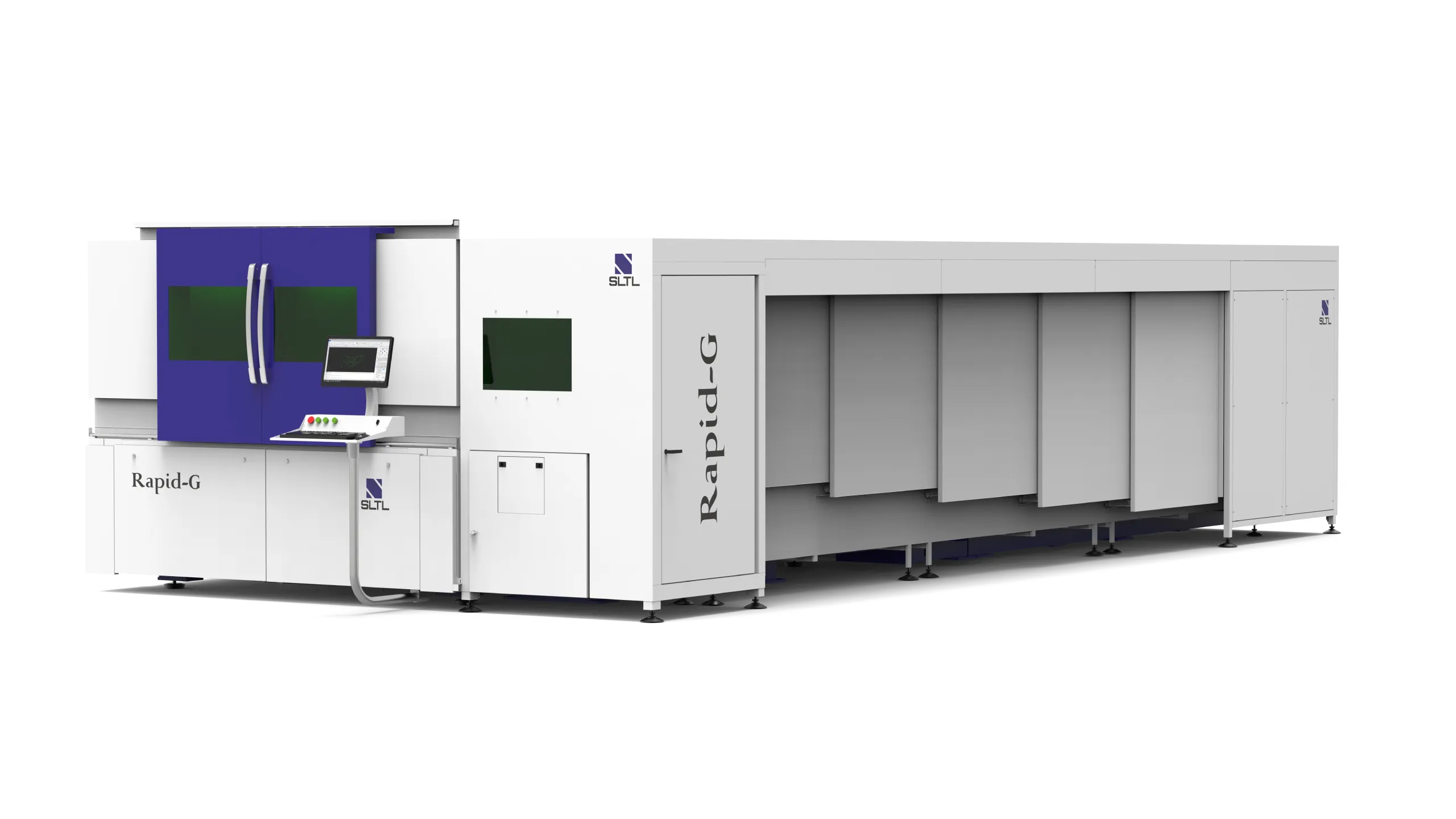
Fiber laser cutting is widely used across various PEB applications due to its versatility and precision. In industrial projects such as factories and manufacturing units, it is used to fabricate structural components that require high strength and accuracy.
In warehouse and logistics facilities, fiber laser cutting enables the production of large-span structures with minimal errors, ensuring efficient space utilization. Commercial applications, including showrooms and office buildings, benefit from the flexibility of laser cutting in creating customized designs and architectural elements.
Additionally, fiber laser technology is used in infrastructure projects such as airport hangars, cold storage facilities, and distribution centers. Its ability to handle different material thicknesses and complex geometries makes it suitable for a wide range of structural and non-structural components.
The adaptability of fiber laser cutting allows manufacturers to meet diverse project requirements while maintaining consistent quality and efficiency across different PEB applications.
This wide adaptability also supports sectors such as Medical devices and Construction, where both consistency and application-specific processing are important.
Cost Optimization & ROI in Large-Scale PEB Manufacturing
Investing in fiber laser cutting technology can significantly improve cost efficiency in large-scale PEB manufacturing. Although the initial capital investment is relatively high, the long-term benefits outweigh the costs.
Fiber lasers reduce operational expenses by minimizing material waste, lowering energy consumption, and reducing the need for manual labor. Their high cutting speed increases production output, enabling manufacturers to complete projects faster and take on more orders.
Additionally, the reduction in secondary processing and rework leads to further cost savings. Maintenance costs are also lower compared to traditional cutting systems, as fiber lasers have fewer moving parts and longer service life.
The return on investment (ROI) is typically achieved within a few years, especially in high-volume production environments. By improving efficiency and reducing overall costs, fiber laser cutting enhances profitability and competitiveness in the PEB industry.
Automation, CNC Integration & Smart PEB Factories (Industry 4.0)
The integration of fiber laser cutting with automation and Industry 4.0 technologies is transforming PEB manufacturing into a smart, data-driven process. Modern laser systems are equipped with CNC controls that enable precise and automated operations.
These systems can be integrated with IoT platforms for real-time monitoring of machine performance, production status, and maintenance requirements. Automated loading and unloading systems further enhance efficiency by reducing manual intervention.
Data analytics and predictive maintenance help identify potential issues before they cause downtime, improving overall productivity. Additionally, integration with ERP and CAD/CAM systems ensures seamless workflow from design to production.
Smart factories leveraging fiber laser technology can achieve higher efficiency, better quality control, and improved resource management, making them more competitive in the evolving manufacturing landscape.
Quality Control & Precision Standards in Laser-Cut PEB Components
Maintaining high-quality standards is essential in PEB manufacturing, and fiber laser cutting plays a key role in achieving this. The technology ensures consistent dimensional accuracy, often within tight tolerances, which is critical for proper assembly.
Laser-cut components have smooth edges and minimal burr formation, reducing the need for additional finishing processes. This improves fitment and reduces the risk of errors during installation.
Quality control measures such as automated inspection systems and real-time monitoring ensure that each component meets required specifications. The consistency offered by fiber laser cutting enhances overall structural integrity and performance.
By adhering to strict quality standards, manufacturers can deliver reliable and durable PEB structures that meet industry requirements.
Challenges in Adopting Fiber Laser Technology for PEB Fabrication
Despite its advantages, adopting fiber laser cutting technology presents certain challenges. The high initial investment can be a barrier for small and medium-sized manufacturers. Additionally, operating these advanced systems requires skilled personnel and proper training.
Power consumption and infrastructure requirements must also be considered, as high-power laser machines require stable electrical supply and proper cooling systems. Handling very thick materials may require higher-capacity machines, increasing costs further.
However, with proper planning and investment, these challenges can be addressed, allowing manufacturers to fully benefit from the technology.
Future Trends: Smart, Sustainable & High-Speed PEB Manufacturing
The future of PEB manufacturing is closely linked to advancements in fiber laser technology. High-power lasers with faster cutting speeds and improved efficiency are being developed to handle thicker materials and complex designs.
Sustainability is also becoming a key focus, with energy-efficient machines and optimized material usage reducing environmental impact. Integration with AI and machine learning is expected to further enhance automation and decision-making processes.
These advancements will enable manufacturers to achieve higher productivity, better quality, and reduced costs, driving the growth of the PEB industry.
Conclusion: Transforming PEB Manufacturing with Fiber Laser Technology
Fiber laser cutting has revolutionized PEB manufacturing by improving precision, speed, and efficiency. It enables manufacturers to produce high-quality components with minimal waste and reduced production time.
As the demand for modern construction solutions continues to grow, adopting advanced technologies like fiber laser cutting will be essential for staying competitive in the industry.
Upgrade Your PEB Production with Advanced Laser Solutions
Ready to take your PEB manufacturing to the next level?
Adopt advanced fiber laser cutting solutions to enhance productivity, reduce costs, and deliver superior quality structures.
Contact us at +91 9925036495 today to find the right solution for your business.
FAQs
1. My PEB components don’t align properly during installation. How can I avoid this issue?
You can solve this by using fiber laser cutting for your components. It gives high accuracy in hole positions and dimensions, so parts will fit perfectly during assembly. This will also reduces rework and saves time on-site.
2. I am facing delays in my PEB project due to slow fabrication. What can I reduce the delays?
You can speed up your production by switching to fiber laser cutting machines. They cut faster than traditional methods and reduce waiting time between processes, helping you complete projects quicker.
3. My material cost is too high because of wastage produced during production. How can I reduce it?
This one of the biggest problem of production. You can reduce material waste by using nesting software with fiber laser cutting. It arranges different cutting parts smartly on sheets, so you get maximum use from every plate and lower your overall cost.
4. I often need rework after cutting of metals. How can I avoid this?
You can avoid rework by cutting the metal using fiber laser cutting machines, as its gives clean edges and accurate cuts. This removes the need for grinding or corrections after cutting.
5. My workers spend too much time on manual cutting and handling. Is there a better way to reduce this time?
You can improve efficiency by using automated fiber laser systems. These machines reduce manual work and increase production speed with less effort.
6. I am not able to maintain consistent quality in bulk production. What should I do?
You can maintain consistent quality by using fiber laser cutting machines. It delivers the same accuracy for every part, even in large batches.
7. I struggle with cutting complex shapes and designs. How can I handle this?
You can easily cut complex designs using fiber laser machines. They can easy handle intricate shapes, slots, and patterns without any extra tools.
8. I want to reduce my overall production cost. Is fiber laser worth the investment?
You can achieve cost savings in the long run with fiber laser cutting machines. It reduces waste, labor cost, and rework, which improves your return on investment over time.
10. I have limited space in my factory. Can I still use this technology?
Yes, you can choose compact fiber laser machines that can fit in your available space. Many modern systems are designed to work efficiently even in smaller setups.
11. I worry about machine maintenance and downtime. What should I expect?
You can expect lower maintenance compared to the traditional cutting machines. Fiber lasers have fewer moving parts and so it provide stable performance while reducing downtime.
12. I want to increase my production capacity without hiring more people. How can I do it?
You can increase your output by using automated fiber laser systems. They run faster and require less manual involvement, helping you scale production easily.
13. I deal with thin and medium thickness materials. Which cutting method is best for me?
You can use fiber laser cutting as it works best for thin to medium thickness materials, giving high speed and clean finish.
14. I want better finishing for my PEB components. What should I do?
You can improve finishing by using fiber laser cutting machines. It produces smooth edges and reduces the need for extra finishing work.
15. I want to move towards smart manufacturing. Where should I start?
You can start by integrating fiber laser cutting with CNC and software systems. This will help you in automating workflow and move towards a smart factory setup.
Author Bio

Mayank Patel
R&D HeadMayank Patel is the Head of Research & Development at SLTL Group, bringing over 20+ years of hands-on experience in the field of laser technology. A forward-thinking innovator, he has played a pivotal role in developing advanced laser cutting, welding, and marking solutions tailored for diverse industries. Under his leadership, SLTL’s R&D division continues to push the boundaries of what laser systems can achieve in modern manufacturing.