Still using the wrong chuck configuration for tube cutting? You could be losing material, speed, and precision every day. Learn how 2-chuck, 3-chuck, and 4-chuck laser cutting machines impact productivity before your competitors do.
How Many Chucks Does Your Tube Laser Cutting Machine Require?
Choosing the right tube laser cutting system goes far beyond power and speed, it starts with selecting the right chuck configuration. Whether it’s a two-chuck, three-chuck, or four-chuck setup, this decision directly impacts how your machine performs in terms of stability, precision, flexibility, and overall productivity.
Modern manufacturers across the Automotive Engineering, Aerospace Engineering, Construction Engineering, medical device manufacturing, electronics, PEB structures, and tool manufacturing industries are rapidly shifting toward advanced tube laser cutting solutions to improve production quality while reducing operational waste.
Today, selecting the right tube laser cutting machine is not just about cutting metal. It is about improving production efficiency, reducing tail waste, supporting automation, and preparing your factory for future manufacturing demands. This is where modern laser solutions become essential for every fabrication business.
Manufacturers using advanced CNC laser cutting machines can now process tubes with higher accuracy, lower rejection rates, and significantly better raw material utilization. Alongside tube processing, many businesses also integrate a laser welding machine, handheld laser welding machine, laser engraving machine, and sheet metal laser cutting machine to create a fully connected fabrication setup.
Understanding Chuck Configurations in Tube Laser Cutting Machines
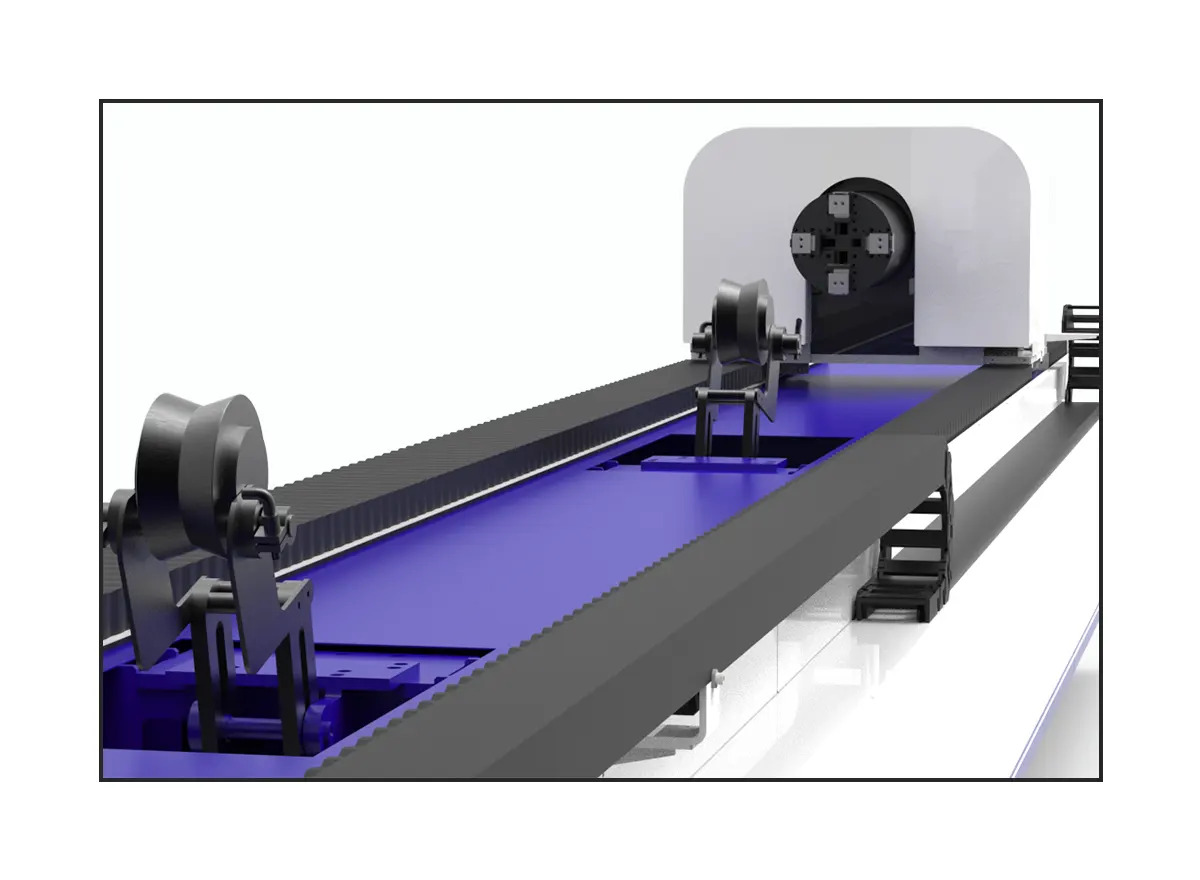
Chucks play a crucial role in holding and positioning the tube securely during the cutting process. The number of chucks used in a machine determines how well the material is supported, especially when dealing with longer, heavier, or more complex profiles.
- Two-chuck systems are typically suited for standard applications where simplicity and cost-efficiency are key.
- Three-chuck systems offer improved material support and reduced tail waste, making them ideal for mid-range production needs.
- Four-chuck systems provide maximum stability, precision, and near-zero tail waste, making them the preferred choice for high-end, high-volume manufacturing.
Each configuration comes with its own advantages depending on the type of work, production volume, and material specifications.
For manufacturers trying to understand how modern four-chuck systems improve tube processing efficiency, the blog “What is a 4-Chuck Tube Laser Cutting Machine & Why It Matters in Modern Fabrication” explains the technology in detail while highlighting the role of advanced CNC cutting machine architecture in modern fabrication.
Two-Chuck Laser Tube Cutters
Two-chuck laser tube cutting machines are designed with one chuck positioned at the front and another at the rear of the machine. The front chuck remains fixed, while the rear chuck moves to support and rotate the tube during processing. Thanks to their straightforward design and economical pricing, these machines are widely used for cutting standard tube profiles such as round, square, rectangular, and oval tubes, especially in small to medium-scale manufacturing environments.
In conventional dual-chuck systems, a noticeable amount of tail scrap is usually left behind after processing. This happens because the section held within the chuck clamping area cannot be cut, resulting in unavoidable material waste. Additionally, since the tube is supported only at two points, longer or heavier pipes may experience slight bending or instability during operation.
Modern advancements in tube laser technology have significantly improved the performance of dual-chuck machines. New-generation systems are engineered to achieve ultra-short tail scrap levels similar to those of three-chuck models. This is made possible through synchronized chuck movement and alternate clamping, which keeps the tube securely supported throughout the entire cutting cycle. As a result, material utilization improves considerably while maintaining stable cutting performance.
Tube cutting manufacturers operating in industries like steel furniture, electronics, signage, fitness equipment, and decorative fabrication often prefer lower power laser cutting machine setups for daily production because they offer a balanced combination of speed and affordability.
At the same time, manufacturers working with sheet metal fabrication often combine their tube cutter with a high power laser cutting machine for plate processing and a handheld laser welding machine for finishing operations.
Advantages of Dual-Chuck Tube Laser Cutters
- Improved Processing Stability: Dual-end support reduces vibration during rotation, helping achieve better cutting precision and smoother operation.
- Flexible Tube Compatibility: Suitable for processing tubes, making it ideal for medium and small tube fabrication applications.
- Economical Investment: Compared to three and four chuck systems, dual-chuck machines offer a more cost-efficient solution while still delivering reliable performance.
- Easy Maintenance: With fewer mechanical components and a simpler structure, maintenance becomes easier and machine downtime is minimized.
- Optimized Material Usage: Advanced chuck coordination helps reduce tail scrap, improving raw material efficiency.
Key Considerations
- Limited Support for Extra-Long Tubes: While highly versatile, two-chuck machines may not provide the same level of support as multi-chuck systems when processing extremely long or heavy tubes.
- Lower Load Capacity: The maximum tube loading capacity is generally limited to around 700 kg, which may restrict certain heavy-duty applications.
- Laser Power Range: These machines are commonly equipped with laser sources up to 6 kW, making them more suitable for medium-thickness material processing.
Three-Chuck Laser Tube Cutters
Three-chuck laser tube cutting machines are developed to provide greater stability, higher precision, and improved material utilization compared to conventional dual-chuck systems. This configuration generally includes one rear chuck and two front chucks that work together to securely clamp and support the tube throughout the cutting cycle.
The additional chuck plays a crucial role in stabilizing the tube, particularly when processing long, heavy, or large-diameter profiles. By increasing the number of support points, the machine significantly reduces tube vibration, deflection, and rotational instability during high-speed cutting operations. This leads to improved dimensional accuracy, smoother edge quality, and more consistent cutting performance across the entire tube length.
One of the major advantages of a three-chuck system is its ability to achieve almost zero tail scrap. Unlike traditional systems where a portion of the tube remains unprocessed due to chuck positioning, the coordinated movement of all three chucks allows the tube to be continuously fed and securely clamped until the final stage of cutting. This greatly improves raw material utilization and reduces production waste, which becomes especially valuable in high-volume manufacturing environments.
Three-chuck tube laser cutting machines are widely used in industries such as automotive, construction equipment, steel furniture, fitness equipment, agricultural machinery, heavy engineering, and structural fabrication where longer tubes and higher cutting precision are required.
SLTL’s advanced laser cutting machine portfolio includes highly efficient tube processing systems designed to improve productivity for industries like the PEB industry, construction equipment manufacturing, and aerospace component production.
If you want to understand the difference between advanced tube systems, the blog “4-Chuck vs. 3-Chuck Tube Laser: Choosing the Right System for Zero Tailing” explains how manufacturers can reduce material waste while improving cutting stability.
Advantages of Three-Chuck Tube Laser Cutters
- Enhanced Tube Stability: The third chuck provides additional support along the tube length, minimizing vibration and preventing tube sagging during rotation.
- Improved Cutting Accuracy: With better tube clamping and alignment, the machine maintains consistent positioning throughout the cutting process.
- Minimal Tail Scrap: The synchronized chuck movement allows the machine to process tubes with very little leftover material.
- Capability to Process Longer Tubes: Three-chuck systems can efficiently handle long tubes, making them suitable for industries that work with oversized structural or industrial tubing.
- Wider Tube Size Compatibility: These machines are capable of processing larger tube diameters and profile sizes.
- Support for High-Power Laser Sources: Three-chuck machines are commonly equipped with laser sources up to 20 kW, enabling faster cutting speeds and improved piercing performance.
- Better Productivity: Improved tube stability and automated feeding systems help reduce machine downtime and increase production efficiency.
Key Considerations
- Higher Equipment Cost: Due to the additional chuck mechanism and advanced control technology, three-chuck machines generally involve a higher initial investment.
- Increased Maintenance Requirements: The presence of more moving parts may require regular maintenance and calibration.
- Larger Installation Space: Three-chuck machines designed for longer tubes may require additional factory floor space.
Four-Chuck Laser Tube Cutters
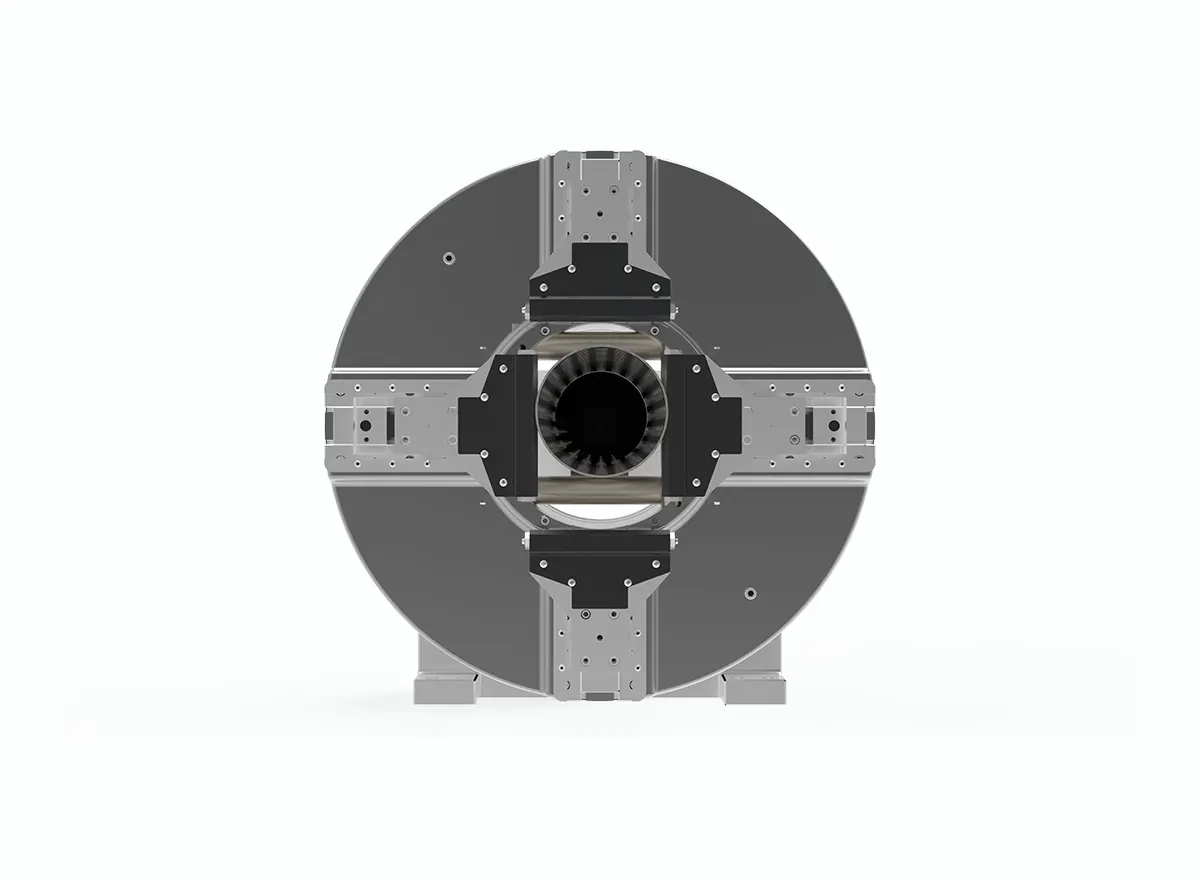
Four-chuck laser tube cutting machines are engineered for high-precision, heavy-duty, and large-scale industrial applications where maximum stability and processing capability are essential. This configuration typically consists of one rear chuck and three front chucks, with one movable chuck positioned close to the cutting area to provide continuous support directly near the processing zone.
The four-chuck structure offers exceptional control over tube movement during cutting. By supporting the tube at multiple points, the system minimizes vibration, prevents material deformation, and maintains highly accurate positioning even at high cutting speeds.
This makes the machine ideal for processing large-diameter, thick-wall, heavy, or irregular-shaped tubes that require extremely precise cutting quality.
One of the standout features of four-chuck systems is their ability to achieve near-zero tail scrap while maintaining superior cutting stability. The advanced chuck coordination ensures that the tube remains securely clamped throughout the entire process, allowing almost complete utilization of raw material.
These systems are widely adopted in industries such as shipbuilding, steel construction, infrastructure manufacturing, oil and gas equipment, heavy machinery, and aerospace fabrication where high load capacity is critical.
For manufacturers looking to understand how modern nesting improves tube utilization, the blog “SLTL Bolt: The Advanced Tube Nesting Software Revolutionizing Tube Cutting” explains how intelligent nesting software improves productivity and material optimization.
Similarly, businesses looking for real-world examples can also explore “Cutting Samples Produced by 4 Chuck Tube Cutting Machine: Shapes, Applications & Precision Benefits” to understand the versatility of advanced tube laser cutting machine systems.
Advantages of Four-Chuck Tube Laser Cutters
- Exceptional Load Capacity: Four-chuck systems are designed to handle extremely heavy tubes and industrial pipes.
- Superior Cutting Stability: Continuous support near the cutting point significantly reduces vibration and tube movement.
- High Precision for Complex Applications: The multi-point clamping structure ensures accurate positioning throughout the cutting process.
- Near-Zero Material Waste: The advanced feeding and chuck coordination system minimizes tail scrap.
- Compatible with High-Power Lasers: Four-chuck machines are commonly paired with high power laser cutting machine systems up to 20 kW or higher.
- Automation Integration: These systems are often equipped with automatic loading and unloading solutions.
- Ideal for Continuous Production: The robust structure makes four-chuck systems ideal for high-volume production lines.
Key Considerations
- Significant Initial Investment: Four-chuck machines represent the highest investment among tube laser cutting configurations.
- Complex Machine Structure: The sophisticated chuck synchronization system requires skilled operators and regular maintenance.
- Higher Operating Requirements: Large-scale machines may require greater installation space and infrastructure support.
How to Choose the Right Chuck Configuration
Selecting the correct chuck configuration directly impacts production efficiency, cutting quality, operational costs, and future scalability.
1. Tube Size and Weight
- Two-chuck systems are suitable for lighter and shorter tubes.
- Three-chuck machines support longer and medium-heavy tubes.
- Four-chuck systems are ideal for oversized industrial pipes.
2. Required Cutting Precision
Applications requiring high dimensional accuracy, detailed profiles, or complex cuts benefit greatly from additional chuck support.
Industries like electronics, medical devices, aerospace, jewelry manufacturing, and tool and mold manufacturing require high-precision laser cutting machine systems to maintain strict quality standards.
3. Production Volume
For low to medium production requirements, dual-chuck systems may provide sufficient efficiency. However, manufacturers with continuous or large-scale production demands often benefit from advanced automation capabilities offered by three- and four-chuck systems.
4. Budget and Return on Investment
- Two-chuck systems offer economical solutions.
- Three-chuck machines provide balanced performance.
- Four-chuck systems deliver premium industrial capabilities.
Manufacturers often integrate multiple laser solutions including fiber laser cutting machine systems, laser engraving machine setups, laser welding machine solutions, and handheld laser welding machine technology to improve workflow flexibility.
5. Future Manufacturing Requirements
Businesses planning future expansion should consider whether upcoming projects may involve larger tubes, heavier materials, or increased production demands.
Modern manufacturers are increasingly investing in integrated fabrication ecosystems that combine tube cutting machines, CNC laser cutting machine systems, high power laser cutting machine solutions, and welding automation to remain competitive.
To understand the advanced technology behind these systems, you can also explore “Features of 4 Chuck Tube Cutting Machine: Advanced Technology for Precision Tube Processing.”
Beyond Tube Cutting: Complete Manufacturing Solutions by SLTL
SLTL manufactures a complete range of industrial laser solutions designed to support multiple industries and fabrication requirements.
Manufacturers can combine:
- Tube laser cutting machines
- Sheet metal laser cutting machine systems
- High power laser cutting machine solutions
- Lower power laser cutting machine setups
- Laser engraving machine systems
- Laser welding machine solutions
- Handheld laser welding machine technology
This allows businesses to create a connected manufacturing workflow for industries such as automotive parts, PEB structures, aerospace components, construction equipment, electronics manufacturing, medical devices, and jewelry production.
SLTL also manufactures advanced systems like:
- FutureX Laser Cutting Machine
- Infinity F1 High Power Laser Cutting Machine
- Vector Fiber Laser Cutting Machine
- X5 3D Laser Cutting Machine
- Tube & Pipe Laser Cutting Machines
Businesses looking for advanced laser solution technologies can also explore the complete SLTL Laser Solution Portfolio and the complete Laser Cutting Machine Range.
Visit SLTL Demo Days for Live Tube Cutting Experience
SLTL is currently organizing live Demo Days where manufacturers can visit and explore advanced tube cutting machine technologies in real production environments.
Visitors can:
- Watch live tube cutting demonstrations
- Compare chuck configurations
- Understand automation capabilities
- Explore material handling systems
- Discuss application requirements with experts
- Evaluate cutting quality and productivity
Manufacturers interested in live demonstrations can register through the Tube Cutting Machine Live Demo Registration Page.
Conclusion
The chuck configuration of a tube laser cutting machine plays a major role in determining cutting performance, material utilization, production efficiency, and operational flexibility.
Two-chuck systems provide a cost-effective solution for standard tube processing. Three-chuck machines offer enhanced stability, improved precision, and better material utilization for longer and more complex tubes. Four-chuck systems deliver exceptional stability, heavy-load capability, automation readiness, and near-zero waste for demanding industrial applications.
By carefully evaluating factors such as tube dimensions, production requirements, accuracy expectations, budget, and future scalability, manufacturers can select the most suitable laser cutting machine solution to maximize productivity and long-term operational value.
To learn more about SLTL’s advanced laser solutions, laser cutting machine systems, laser welding machine technology, handheld laser welding machine solutions, and industrial automation capabilities, contact the team today. You can register for the Tube Cutting Machine Live Demo and explore advanced tube laser cutting technology firsthand. For more details about SLTL’s advanced laser solutions, contact the team today at +919925036495 or email mkt@sltl.com. You can also explore the complete product range at www.sltl.com.
FAQs
1. How do I know whether I need a 2-chuck, 3-chuck, or 4-chuck tube laser cutting machine?
You should select the chuck configuration based on your tube size, production volume, precision requirements, and material weight. If you mainly process standard tubes in medium quantities, a 2-chuck system may work well for you. However, if you regularly process long, heavy, or high-precision tubes, you should consider a 3-chuck or 4-chuck laser cutting machine for better stability and lower material waste.
2. Should I invest in a 4-chuck tube laser cutting machine for heavy fabrication work?
If you handle thick-wall tubes, large-diameter pipes, or heavy industrial structures, a 4-chuck machine can help you improve stability and cutting accuracy. You can also reduce vibration and achieve near-zero tail scrap, which helps you save raw material costs in long-term production.
3. Will a 3-chuck tube laser cutting machine help me reduce material waste?
Yes, you can significantly reduce tail scrap with a 3-chuck system. The synchronized chuck movement keeps the tube supported until the final stage of cutting. This allows you to use more raw material efficiently and lower your overall production losses.
4. Can I process long tubes more accurately with a multi-chuck laser cutting machine?
Yes, you can achieve much better accuracy while processing long tubes with 3-chuck and 4-chuck systems. Additional support points reduce tube sagging and vibration during rotation, helping you maintain consistent cutting precision throughout the entire tube length.
5. Which industries benefit the most from 4-chuck tube laser cutting machines?
You can benefit greatly from a 4-chuck system if you work in industries like construction, PEB fabrication, automotive parts, aerospace, heavy engineering, shipbuilding, oil and gas equipment, or infrastructure manufacturing. These industries often require high load capacity, excellent precision, and stable cutting performance.
6. Should I choose a high power laser cutting machine for tube processing?
You should consider a high power laser cutting machine if you regularly process thick materials, large tubes, or high production volumes. Higher power systems help you improve cutting speed, piercing performance, and overall productivity while maintaining cutting quality.
7. Can I integrate a tube laser cutting machine with a laser welding machine in my factory?
Yes, you can create a complete fabrication workflow by combining a tube laser cutting machine with a laser welding machine or handheld laser welding machine. This setup helps you reduce manual work, improve production speed, and maintain better consistency in finished products.
8. Is a lower power laser cutting machine enough for my production needs?
If your factory mainly processes thin or medium-thickness tubes with moderate production volume, a lower power laser cutting machine may be sufficient for you. It can provide reliable performance while keeping operational and investment costs lower.
9. How can I improve automation in my tube fabrication process?
You can improve automation by selecting advanced tube laser cutting machines equipped with automatic loading, unloading, intelligent nesting software, and smart production controls. These features help you reduce downtime, improve material handling, and increase overall production efficiency.
10. Can I visit SLTL to see tube laser cutting machines before making a purchase decision?
Yes, you can visit SLTL Demo Days to explore live tube laser cutting demonstrations. This gives you the opportunity to compare different chuck configurations, understand machine capabilities, evaluate cutting quality, and discuss your production requirements directly with experts before investing.
11. Will advanced tube nesting software help me save raw material costs?
Yes, advanced nesting software helps you optimize tube placement and reduce unnecessary material wastage. You can improve material utilization, reduce production costs, and achieve better cutting efficiency, especially in large-scale manufacturing operations.
12. How do I select the right laser solution for my future production expansion?
You should evaluate your future production goals, expected tube sizes, automation needs, and planned production volume before selecting a machine. Choosing a scalable laser solution today can help you avoid future limitations and support long-term business growth.
Author Bio

Mayank Patel
R&D HeadMayank Patel is the Head of Research & Development at SLTL Group, bringing over 20+ years of hands-on experience in the field of laser technology. A forward-thinking innovator, he has played a pivotal role in developing advanced laser cutting, welding, and marking solutions tailored for diverse industries. Under his leadership, SLTL’s R&D division continues to push the boundaries of what laser systems can achieve in modern manufacturing.