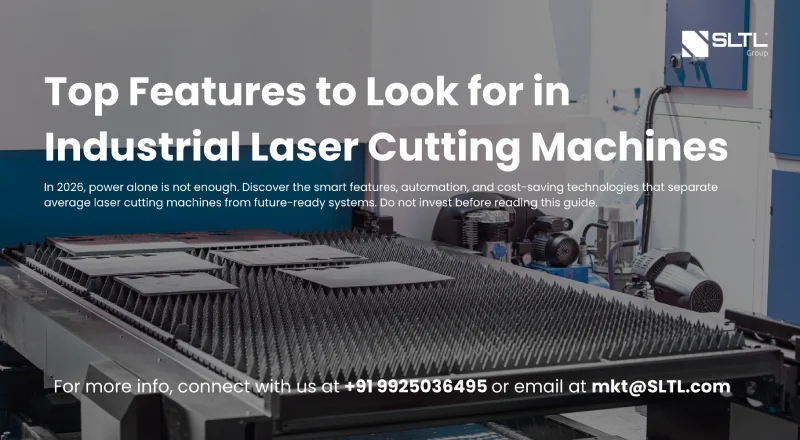
AI is already transforming laser cutting. Smart software now reduces scrap, predicts breakdowns, and cuts faster with better quality. Shops that upgrade are lowering cost per part today. If you wait, your competitors will not.
Introduction
Imagine a factory that can think, adjust, and improve on its own. A laser cutting machine is no longer just a tool that follows commands. Today, it is an intelligent system that learns from data and makes decisions in real time.
Manufacturing has evolved rapidly. We moved from manual CNC operations to automated fiber laser systems. Now, we are entering a new phase where AI-driven ecosystems control cutting, welding, marking, and automation together. Machines are connected, data is analyzed instantly, and every cut is optimized.
This shift was clearly highlighted at the India AI Impact Summit 2026. The summit showed that AI is not limited to software companies. It is becoming the backbone of Indian manufacturing.
AI in laser cutting is not theory anymore. It is practical, measurable, and already transforming fabrication shops.
The Core of “Smart” Software in Laser Cutting
AI is changing how laser cutting machines operate at a deep level. Let us understand the main technologies behind this transformation.
- Intelligent Path Optimization: In traditional systems, machines follow pre-defined toolpaths. AI-driven systems go further. They calculate the most efficient cutting path automatically. This reduces unnecessary head movement and air-cut time. Less idle movement means faster production, lower power usage, and improved machine life.
- Smart Nesting: Basic nesting arranges parts on a sheet. AI-based smart nesting does much more. It studies part shapes, sheet dimensions, and material behavior to reduce scrap to near zero. SLTL’s smart nesting software, integrated within its laser cutting machines, helps manufacturers save material by intelligently arranging components like a puzzle. This reduces waste and directly lowers cost per part.
- Vision Systems and Edge Detection: AI-powered vision systems use cameras and sensors to check material positioning. If a sheet is slightly misaligned, the system detects it instantly. The cutting head automatically adjusts position and focus. This avoids rejected parts and improves consistency without manual correction.
SLTL Group: Pioneering AI-Enabled Laser Solutions
SLTL Group has integrated AI, IoT technology, and Industry 4.0 capabilities into its machines. These are not add-ons. They are built into the system architecture.
Real-Time Decision Making
Advanced machines like Infinity F1 and Future X use sensors to monitor cutting conditions. The system adjusts power, speed, and frequency based on real-time feedback. If the material thickness changes slightly or heat increases, the machine responds instantly. This ensures stable cutting quality without operator trial and error.
Predictive Maintenance (IoT + AI)
Instead of waiting for breakdowns, AI analyzes vibration, temperature, and usage data. It predicts when a lens, nozzle, or consumable part may need replacement. This predictive maintenance model is powered by connected IoT platforms, reducing downtime and protecting production schedules.
Automation Integration
SLTL machines are Industry 4.0 ready. They connect with robotic loading and unloading systems for seamless workflow. Machines communicate with automation systems to schedule jobs, manage material flow, and reduce manual handling. This creates a fully connected manufacturing ecosystem.
Why It Matters: Efficiency, Sustainability, and Quality
AI is not just about advanced technology. It directly impacts business results.
Zero Human Error
AI eliminates guesswork. Operators do not need repeated testing to find correct parameters. The system selects optimized settings automatically. This improves quality consistency across batches.
Sustainability
AI reduces scrap through smart nesting. It reduces energy consumption by optimizing speed and cutting time. Less waste means fewer raw materials used. This supports environmentally responsible manufacturing.
Cost Efficiency
When material usage improves and downtime reduces, cost per part decreases. Manufacturers in industries like automotive parts manufacturing, tool and mold manufacturing, jewelry industry, aerospace industry, electronics manufacturing, medical device manufacturing, and the construction industry benefit greatly from this intelligent control.
AI-based control ensures each industry receives precision and reliability.
Connecting the Dots: The AI Impact Summit 2026
The vision presented at the India AI Impact Summit 2026 focused on three pillars: People, Planet, and Progress.
AI in laser cutting reflects these pillars clearly.
- People: Machines become easier and safer to operate. Operators focus on supervision instead of manual parameter testing.
- Planet: Smart nesting and optimized cutting reduce waste and energy consumption.
- Progress: Indian manufacturers gain global competitiveness through intelligent automation.
The summit was not just a discussion platform. Its vision is already visible in advanced manufacturing systems.
Conclusion: The Future is Already Here
AI in laser cutting is not a future concept. It is the present standard for manufacturers who want to stay competitive. Smart software, real-time data analysis, predictive maintenance, and automation integration are transforming fabrication.
SLTL Group is making these advanced technologies accessible to manufacturers across the globe. From advanced laser cutting machines to intelligent laser welding machines and precision laser engraving machines, intelligent control is becoming the foundation of modern fabrication.
FAQs
1. When you say a laser cutting machine is “smart”, what does that really mean for me?
When we say a machine is smart, we mean it does not just follow fixed instructions. It studies what is happening during cutting and adjusts settings on its own. So instead of you constantly changing speed or power, the machine helps you get the right result automatically.
2. How will AI actually help me in my daily production work?
Think about the time you spend doing trials. Adjusting parameters. Wasting a sheet because something was slightly off. AI reduces that struggle. It reads data in real time and fine-tunes the process. For you, that means smoother cuts, fewer rejected parts, and more confidence while running jobs.
3. If the machine becomes smart, what happens to the operator’s role?
You still need a skilled operator. But instead of fighting with settings all day, you focus on planning, monitoring, and improving output. We can say the machine handles the technical adjustments, and you handle the production strategy.
4. I often lose material in scrap. Can smart software really make a difference?
Yes, and this is where you will feel the impact quickly. Smart nesting software arranges your parts in the most efficient way possible. Even a small improvement in sheet utilization can save you a lot of money over months of production. Less scrap directly means better margins for you.
5. I worry about machine breakdowns. Can AI help with that?
It can. With predictive maintenance, the system keeps checking vibration, temperature, and usage patterns. If something looks unusual, it alerts you early. So instead of a sudden breakdown in the middle of production, you get time to plan maintenance.
6. I run a small or mid-sized workshop. Is this technology too advanced for me?
Not at all. In fact, smart software can help you compete with bigger players. When your machine optimizes material, reduces errors, and saves time, you produce more with the same resources. That gives you a strong advantage.
7. Will smart systems increase my electricity bill?
Usually, the opposite happens. Since the machine reduces unnecessary movements and cuts faster with optimized parameters, energy used per part goes down. So you get better efficiency without extra power cost.
8. Can I connect this smart laser machine with my existing factory system?
Yes, most modern machines are designed to connect with ERP systems, automation setups, and monitoring dashboards. So if you are planning a connected factory environment, the machine can easily become part of that setup.
9. I am concerned about data security. Should I be worried?
It is natural to think about that. When you choose a trusted manufacturer like SLTL, you get secure software architecture and controlled access systems. We always recommend going with a brand that provides proper support and secure IoT connectivity.
10. How do I decide if upgrading to a smart laser cutting machine is the right move for me?
For this, ask yourself a few things. Are you facing too much scrap? Do you depend heavily on trial and error? Are breakdowns affecting your delivery timelines? If your answer is yes to these, then moving to a smart system can change how smoothly your production runs. It is not just about technology, it is about giving you better control over your business.
Author Bio

Mayank Patel
R&D HeadMayank Patel is the Head of Research & Development at SLTL Group, bringing over 20+ years of hands-on experience in the field of laser technology. A forward-thinking innovator, he has played a pivotal role in developing advanced laser cutting, welding, and marking solutions tailored for diverse industries. Under his leadership, SLTL’s R&D division continues to push the boundaries of what laser systems can achieve in modern manufacturing.