Earth-moving equipment needs strong, precise parts made from thick steel. This blog explains how laser cutting, CNC bending, and laser welding improve speed, accuracy, and durability, helping manufacturers produce high-quality construction machinery efficiently.
The global construction and mining industries rely heavily on durable, high-performance machinery. From excavators and bulldozers to loaders and graders, these machines operate in some of the harshest environments and require exceptional strength, precision, and reliability. At the core of this industry lies earth moving equipment manufacturing, a sector that demands advanced fabrication technologies capable of handling thick metals, complex geometries, and high-volume production.
Modern manufacturers are increasingly adopting laser manufacturing technologies to improve productivity, accuracy, and consistency. Solutions like laser cutting machines for heavy equipment, CNC bending for thick metal, and laser welding for heavy machinery are transforming how construction equipment components are produced.
In this blog, we explore how laser-based fabrication technologies are revolutionizing fabrication solutions for construction equipment and enabling manufacturers to meet growing global demand with efficiency and precision.
Introduction to Earth-Moving Equipment Manufacturing
Earth-moving equipment includes machines used in construction, mining, agriculture, and infrastructure development. These machines must withstand heavy loads, vibrations, abrasion, and extreme weather conditions.
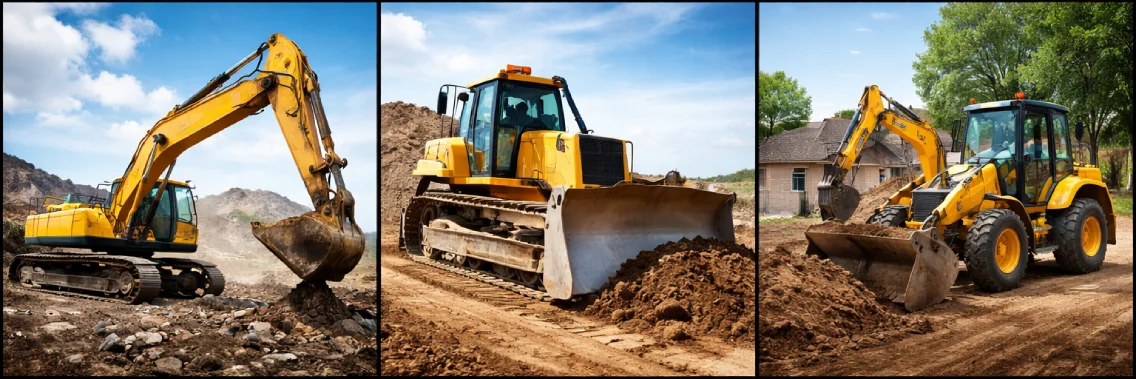
Common equipment includes:
- Excavators
- Bulldozers
- Backhoe loaders
- Motor graders
- Wheel loaders
- Dump trucks
Manufacturing these machines involves producing large structural components such as:
- Buckets
- Chassis frames
- Loader arms
- Dozer blades
- Reinforcement plates
- Mounting brackets
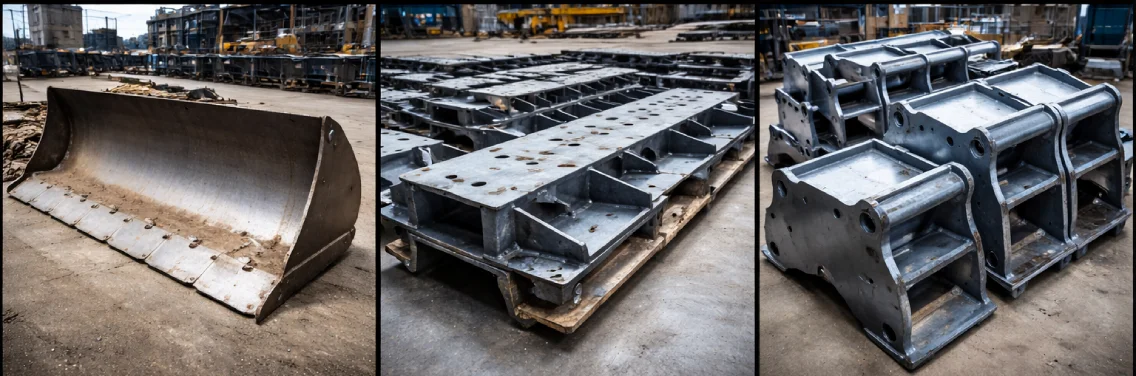
These components require high structural integrity, dimensional accuracy, and strong weld joints, making fabrication technologies critical to product quality.
Traditional manufacturing methods such as plasma cutting and manual welding are gradually being replaced by advanced laser-based fabrication systems that deliver better results with lower operational costs.
Materials Used in Construction Equipment Manufacturing
Earth-moving machines are designed for durability and strength, which requires specialized materials.
Common materials include:
Mild Steel (MS): Widely used for structural components due to its strength and affordability.
High-Strength Steel: Used in load-bearing parts where strength-to-weight ratio is critical.
Hardox and Wear-Resistant Steel: These materials are used in high-abrasion parts such as:
- Excavator buckets
- Dozer blades
- Dump truck liners
Wear-resistant steel improves equipment lifespan and reduces maintenance costs.
Thick Steel Plates: Many heavy equipment components use plates ranging from 6 mm to 40 mm thickness, requiring powerful cutting and forming technologies.
Processing these materials demands precision fabrication systems capable of maintaining quality across thick metal sections — an area where laser technology excels.
Manufacturing Challenges in Heavy Equipment Fabrication
The earth moving equipment manufacturing industry faces several fabrication challenges:
- Handling Thick Metal Plates: Cutting and bending thick metal without distortion requires powerful and accurate machinery.
- Maintaining Structural Strength: Components must withstand heavy loads and continuous vibration.
- Minimizing Heat Distortion: Conventional cutting and welding methods often create large heat-affected zones.
- Achieving Dimensional Accuracy: Large parts must fit perfectly during assembly.
- Improving Production Speed: Manufacturers must meet increasing demand while maintaining quality.
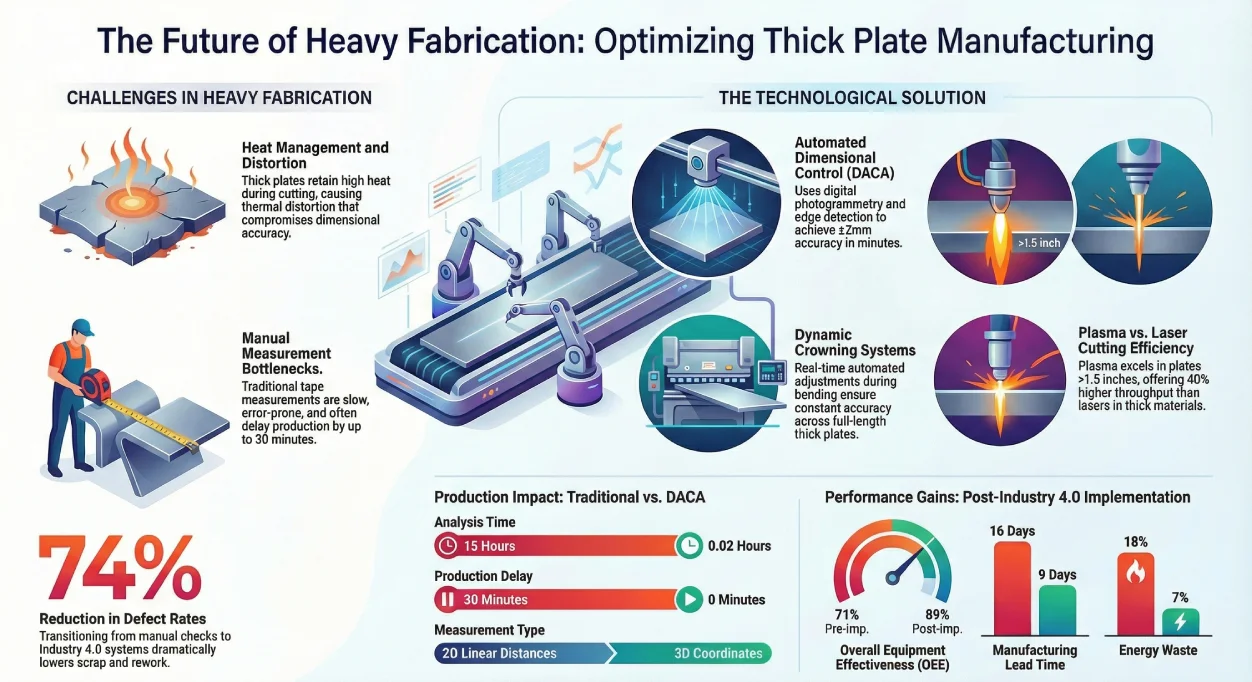
These challenges are pushing manufacturers toward laser-based fabrication solutions for construction equipment.
Laser Cutting in Heavy Equipment Production
One of the most significant advancements in heavy equipment manufacturing is the adoption of the laser cutting machine for heavy equipment fabrication.
High-power fiber laser cutting machines can process thick steel plates with remarkable precision and speed.
Applications of Laser Cutting in Construction Equipment
Laser cutting is widely used for producing:
- Excavator bucket plates
- Chassis components
- Loader arms
- Reinforcement ribs
- Mounting brackets
- Structural panels
Advantages of Laser Cutting
- High Precision: Laser cutting produces clean edges and tight tolerances, reducing secondary finishing operations.
- Faster Production: Fiber laser systems significantly reduce cutting time compared to traditional methods.
- Minimal Heat-Affected Zone: This helps maintain the mechanical properties of the metal.
- Material Optimization: Advanced nesting software reduces scrap and improves material utilization.
- Consistent Quality: Laser cutting ensures repeatable accuracy across production batches.
For manufacturers producing heavy equipment components in volume, laser cutting machines provide reliability, speed, and cost efficiency.
CNC Bending Applications for Thick Metal Components
After cutting, many heavy equipment parts require precise forming. This is where CNC bending for thick metal plays a crucial role.
Modern CNC press brakes can bend thick steel plates accurately while maintaining structural strength.
CNC Bending Applications in Earth-Moving Equipment
Examples include:
- Chassis frames
- Bucket side walls
- Structural brackets
- Reinforcement components
- Loader body panels
Benefits of CNC Bending
- Accurate Angle Control: Ensures proper assembly and alignment.
- Repeatability: Consistent bending across large production runs.
- Reduced Manual Effort: Automation reduces operator dependency.
- Structural Integrity: Precision bending maintains metal strength.
CNC bending systems integrated with laser cutting machines create a streamlined fabrication workflow for heavy equipment manufacturers.
Laser Welding for Heavy Machinery
Welding is a critical step in manufacturing construction equipment. Strong weld joints are essential for machine durability and safety.
Laser welding for heavy machinery is becoming increasingly popular because it offers superior weld quality and efficiency compared to traditional welding.
Applications of Laser Welding
Laser welding is used in:
- Structural frame welding
- Boom assembly welding
- Hydraulic component welding
- Reinforcement joint welding
- Precision component welding
Advantages of Laser Welding
- Deep Penetration Welding: Laser welding produces strong joints with minimal filler material.
- Reduced Heat Distortion: Smaller heat-affected zones preserve component geometry.
- Faster Welding Speed: Laser welding can significantly increase production efficiency.
- Clean Weld Finish: Minimal post-processing is required.
- Automation Compatibility: Laser welding integrates easily with robotic systems.
For heavy equipment manufacturers, laser welding improves strength, productivity, and consistency.
Automation and Industry 4.0 in Fabrication
As manufacturing becomes more competitive, automation is becoming essential in heavy equipment production.
Modern fabrication solutions for construction equipment now include:
- Automated laser cutting systems
- Robotic welding cells
- CNC bending automation
- IoT-enabled machines
- Production monitoring systems
Benefits of Smart Manufacturing
- Real-Time Monitoring: Manufacturers can track machine performance and production data.
- Predictive Maintenance: Reduces downtime and maintenance costs.
- Improved Productivity: Automation reduces cycle time.
- Quality Control: Digital systems ensure consistent production standards.
Industry 4.0 technologies are helping manufacturers scale operations while maintaining high quality and efficiency.
The Future of Earth-Moving Equipment Manufacturing
The demand for construction equipment is growing rapidly due to infrastructure development, mining expansion, and urbanization.
Manufacturers must adopt advanced fabrication technologies to remain competitive.
Laser-based manufacturing systems provide:
- Higher precision
- Faster production
- Lower operational costs
- Improved durability of components
- Automation readiness
These advantages make laser technology a key enabler of modern heavy equipment manufacturing.
Conclusion
The evolution of earth moving equipment manufacturing is closely tied to advancements in fabrication technology. From cutting thick steel plates to welding structural components, modern manufacturers need solutions that deliver strength, accuracy, and productivity.
Technologies such as laser cutting machines for heavy equipment, CNC bending for thick metal, and laser welding for heavy machinery are redefining how construction equipment is built.
By adopting advanced fabrication solutions for construction equipment, manufacturers can improve efficiency, reduce costs, and produce high-quality machines capable of performing in demanding environments.
Laser-based fabrication systems are not just improving manufacturing – they are shaping the future of the construction equipment industry.
Author Bio

Mayank Patel
R&D HeadMayank Patel is the Head of Research & Development at SLTL Group, bringing over 20+ years of hands-on experience in the field of laser technology. A forward-thinking innovator, he has played a pivotal role in developing advanced laser cutting, welding, and marking solutions tailored for diverse industries. Under his leadership, SLTL’s R&D division continues to push the boundaries of what laser systems can achieve in modern manufacturing.