Still relying on old fabrication methods for PEB? You might be losing time, accuracy, and profit without realizing it. See how modern laser technology is changing everything, before your competitors move ahead and take the lead.
Pre-Engineered Buildings (PEBs) have transformed modern construction by offering a faster, more efficient, and cost-effective alternative to traditional building methods. Instead of constructing everything on-site, PEB structures are designed, fabricated, and prepared in a factory environment, ensuring precision and consistency.
With advancements in manufacturing technologies, especially fiber laser cutting, laser welding, and laser marking, PEB fabrication has evolved into a highly accurate and automated process. These technologies are widely used across industries such as Construction, Automotive parts, Aerospace, and Electronic Medical devices, where precision and repeatability are critical. They not only improve structural quality but also enhance production speed, traceability, and overall project efficiency.
In fact, many manufacturers are already seeing this shift in action, as explained in Building Smarter, Faster, Stronger: The Power of Fiber Laser in PEB Manufacturing, where fiber laser adoption is directly linked to faster project execution.
What is a Pre-Engineered Building (PEB)?
A Pre-Engineered Building (PEB) is an advanced construction approach where the entire structure is planned, designed, and manufactured in a factory before being transported to the site for assembly. Instead of building everything on-site, the structure is delivered in a ready-to-assemble format, often referred to as a “knock-down” condition.
Once the components reach the site, they are assembled and installed using bolted connections and lifting equipment such as cranes. This method significantly reduces construction time while ensuring high precision and quality.
One of the key advantages of PEB structures is their efficiency in design. Compared to conventional steel buildings, a well-engineered PEB can be considerably lighter-often reducing structural weight by up to 25-30%-without compromising strength or durability.
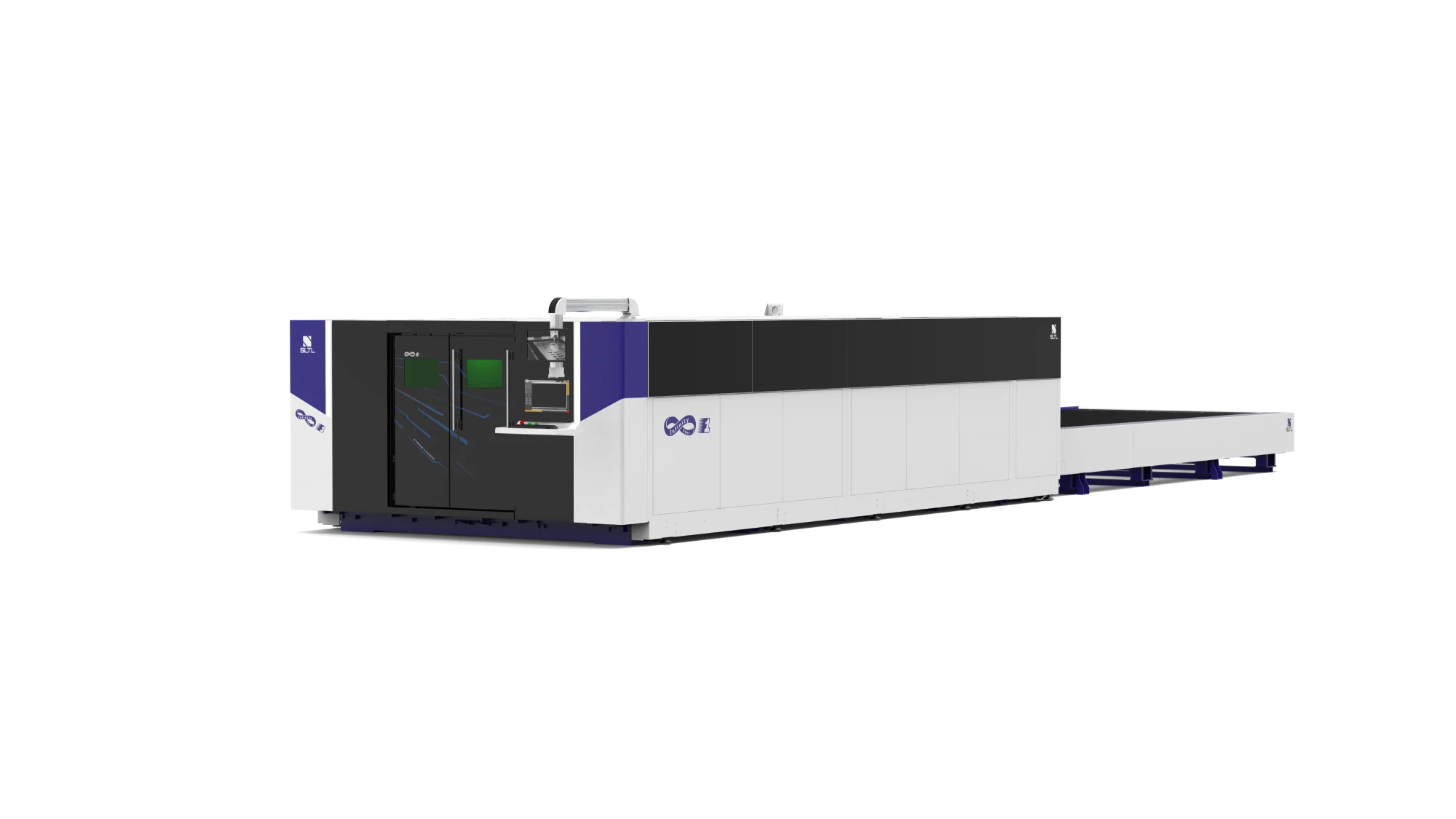
To achieve this level of precision and weight optimization, manufacturers increasingly rely on advanced Laser cutting machine, especially high-performance solutions like Infinity F1 (for heavy duty manufacturing), which are designed to handle thick plates and large structural components efficiently.
If you are still relying on traditional cutting methods, it is worth understanding the impact discussed in Are Traditional Cutting Methods Quietly Eating Your Profits?, where inefficiencies in fabrication directly affect overall ROI.
Detailed Explanation of PEB Structural Components
1. Roof System
The roof system forms the uppermost covering of the building and is designed to protect the structure from environmental conditions such as rain, sunlight, and wind. In PEB structures, the roof is typically made of metal sheets supported by secondary members. It is engineered to handle loads like dead load (self-weight), live load (maintenance), and wind uplift forces.
Material Used:
- Galvanized steel sheets (GI sheets)
- Color-coated steel sheets (PPGI/PPGL)
- Aluminum sheets (in some cases)
- Insulated sandwich panels (PUF, EPS, Rockwool)
2. Purlins
Purlins are horizontal structural members placed along the roof slope. They are mounted on top of rafters and serve as the base for fixing roof sheets.
Key Functions:
- Support roof cladding/sheets
- Distribute loads to rafters
- Maintain spacing and alignment of roofing system
They are usually made from cold-formed steel sections like Z or C profiles for strength and lightweight performance.
Material Used:
- Cold-formed steel sections (Z-section / C-section)
- Galvanized steel for corrosion resistance
3. Rafters
Rafters are inclined beams that form part of the primary frame of the building. They connect to columns and support the roof system.
Key Functions:
- Carry roof loads (dead, live, wind)
- Transfer loads to columns
- Provide structural shape to the building
Rafters are designed based on span and load requirements and are often tapered to optimize material usage.
Material Used:
- Built-up steel sections (fabricated from mild steel plates)
- Hot-rolled steel sections (in some designs)
- Typically made from structural steel grades like IS 2062 or equivalent
4. Columns (Frame)
Columns are vertical load-bearing members that form the backbone of the structure. They support rafters and transfer the entire load of the building to the foundation.
Key Functions:
- Carry vertical loads
- Resist lateral forces (wind/seismic)
- Provide structural stability
Columns are usually fabricated from steel plates and designed for high strength and durability.
Material Used:
- Built-up structural steel sections
- Mild steel plates welded into I-sections
- High-strength structural steel (e.g., IS 2062, ASTM A36)
5. Base Plate
The base plate is a thick steel plate placed at the bottom of the column, connecting it to the foundation.
Key Functions:
- Distribute column load to concrete foundation
- Provide a stable connection between steel and civil structure
- Anchor the building using foundation bolts
Proper base plate design is critical for overall structural safety.
Material Used:
- Thick mild steel plates
- Anchor bolts made from high tensile steel
6. Girt (Wall Support)
Girts are horizontal members attached to columns along the wall height. They support wall cladding panels.
Key Functions:
- Hold wall sheets/cladding
- Transfer wind loads to columns
- Maintain wall alignment
Like purlins, girts are typically made from cold-formed steel sections.
Material Used:
- Cold-formed steel (C or Z sections)
- Galvanized steel for durability
7. Bracing System
The bracing system consists of diagonal members placed between columns and rafters to provide stability.
Key Functions:
- Resist lateral forces (wind, earthquake)
- Prevent structural deformation
- Maintain geometric stability of the building
Bracing can be in the form of rods, cables, or angle sections depending on design requirements.
Material Used:
- Steel rods or tie rods
- Angle sections (MS angles)
- High-tensile steel cables (in some designs)
8. Eave Strut
The eave strut is located at the junction where the roof meets the sidewall (eave level).
Key Functions:
- Connect roof and wall systems
- Support both roof sheets and wall cladding
- Transfer loads between purlins and girts
It acts as a transitional structural member in the building.
Material Used:
- Cold-formed steel sections
- Galvanized steel
9. Cladding / Sheeting (Walls & Roof)
Cladding refers to the outer covering of the building, usually made from metal sheets.
Key Functions:
- Protect structure from weather
- Provide thermal insulation (if insulated panels used)
- Enhance aesthetic appearance
Cladding materials can be customized based on insulation, durability, and design needs.
Material Used:
- Pre-painted galvanized steel (PPGI)
- Galvalume sheets (PPGL)
- Insulated panels (PUF, EPS, Rockwool)
- Aluminum sheets (for corrosion-prone environments)
10. Fasteners (Bolts & Connections)
Fasteners are essential components used to join all structural elements together.
Key Functions:
- Connect beams, columns, and secondary members
- Enable quick assembly and disassembly
- Ensure structural integrity
High-strength bolts are commonly used to ensure safety and long-term performance.
Material Used:
- High tensile bolts
- Galvanized bolts and nuts
- Self-drilling screws for cladding
- Anchor bolts embedded in concrete
Conclusion
Pre-Engineered Buildings (PEBs) represent a modern approach to construction that combines speed, efficiency, and structural reliability. By integrating advanced technologies such as fiber laser cutting, laser welding, and laser marking, manufacturers can achieve higher precision, better quality, and smarter production workflows.
From Construction and Automotive parts to Aerospace, Tool and Mold Manufacturing, Jewelery, and Electronic Medical devices, the adoption of laser technology is transforming how industries approach fabrication.
These innovations are not just improving fabrication, they are redefining how steel structures are designed, manufactured, and assembled for the future.
Ready to upgrade your PEB manufacturing capabilities? Contact +91 9925036495 today to explore advanced laser solutions.
FAQs
1. How does laser cutting improve my PEB manufacturing process?
When you use laser cutting, you get higher accuracy in every component you produce. This means your parts fit perfectly during assembly, reducing rework and delays. You also save time because cutting is faster and more consistent compared to traditional methods.
2. Why should I replace traditional cutting methods in my fabrication setup?
If you continue using traditional cutting, you may lose time in repeated setups and slower processing. When you switch to laser cutting, you reduce cycle time, improve edge quality, and increase overall productivity, which directly impacts your profit margins.
3. How can I reduce material wastage while manufacturing PEB components?
You can reduce wastage by using advanced nesting software with laser machines. This allows you to place parts efficiently on the sheet, ensuring maximum material utilization and lowering your raw material costs.
4. How does laser welding help me in PEB structure fabrication?
When you use laser welding, you get strong and clean joints with minimal heat impact. This helps you maintain the strength of structural components like columns and rafters while reducing post-processing work.
5. Can I improve production speed without compromising quality?
Yes, you can achieve both by using modern laser machines. You get faster cutting speeds along with consistent quality, which allows you to produce more parts in less time without affecting accuracy.
6. How do I ensure traceability of components in my PEB projects?
You can use laser marking to add identification details like batch numbers or part codes on each component. This helps you track parts easily and maintain quality control throughout your production process.
7. How can I handle heavy-duty steel components efficiently?
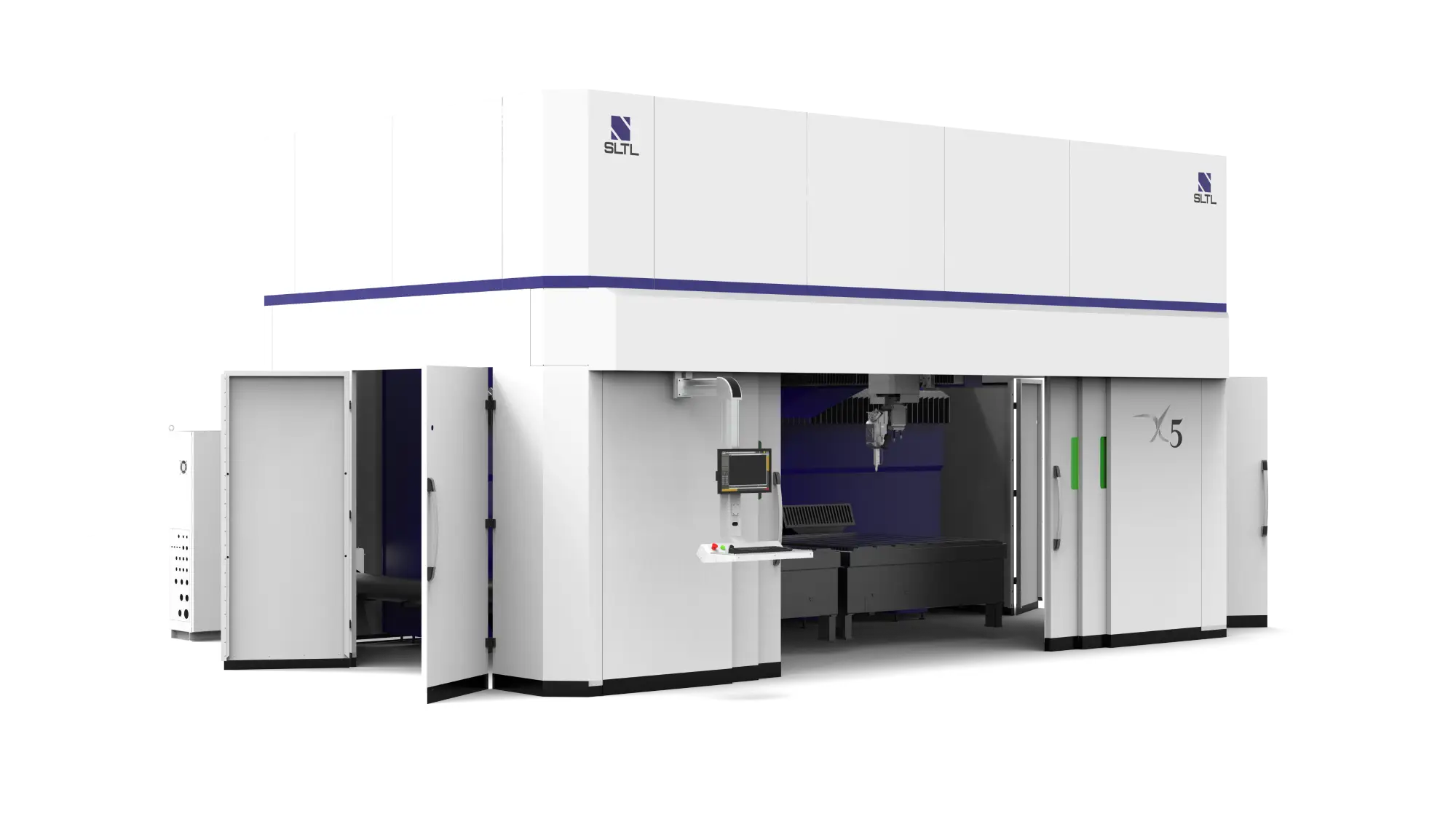
You can use high-power laser cutting machines designed for heavy-duty manufacturing. These machines allow you to cut thick materials with precision and speed, making them suitable for large structural parts.
8. How do I improve assembly efficiency at the construction site?
You can improve assembly by ensuring all parts are cut with high precision. When your components are accurate, they fit perfectly on-site, reducing alignment issues and speeding up installation.
9. Is laser technology useful only for construction-related applications?
No, you can use laser technology across multiple industries like automotive parts, aerospace, tool and mold manufacturing, jewelry, electronics, and medical devices. The same precision and efficiency apply across all these sectors.
10. How can I make my manufacturing process more automated?
You can integrate cutting, welding, and marking into a connected system. This reduces manual intervention, improves workflow, and helps you manage production more efficiently with better control over operations.
11. How do I maintain consistent quality across all my PEB components?
You can maintain consistency by using automated laser systems. These machines follow programmed instructions, ensuring every part is produced with the same level of accuracy and finish.
12. What is the biggest advantage of using laser technology in PEB manufacturing?
The biggest advantage for you is the combination of speed, precision, and efficiency. You can complete projects faster, reduce errors, and improve overall production quality, giving you a strong competitive advantage.
Author Bio

Mayank Patel
R&D HeadMayank Patel is the Head of Research & Development at SLTL Group, bringing over 20+ years of hands-on experience in the field of laser technology. A forward-thinking innovator, he has played a pivotal role in developing advanced laser cutting, welding, and marking solutions tailored for diverse industries. Under his leadership, SLTL’s R&D division continues to push the boundaries of what laser systems can achieve in modern manufacturing.